




AgriLoop Project Partners Gathered in Lithuania for the First Partner Meeting
31 July 2026
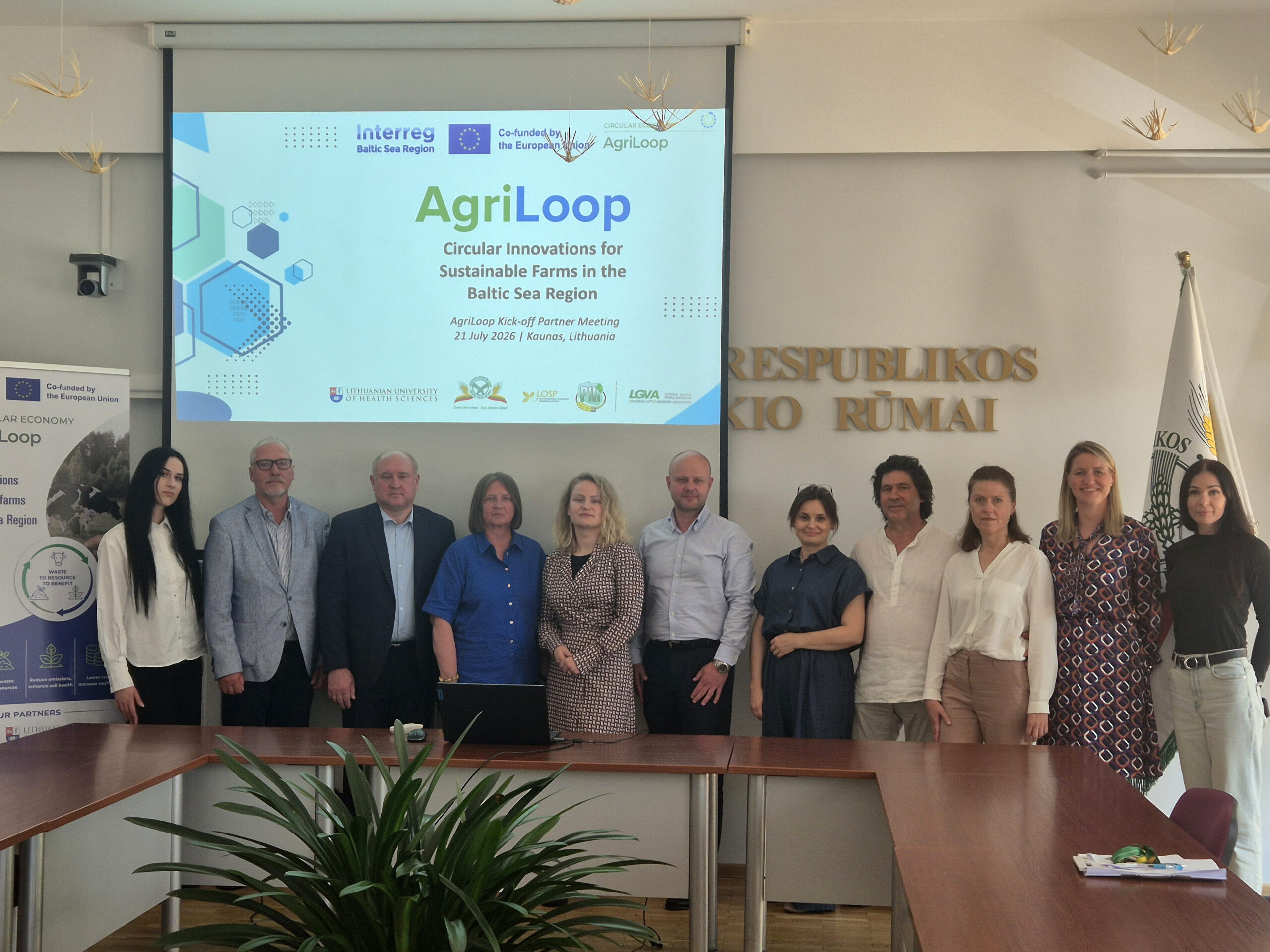
On 21 July 2026, partners of the AgriLoop project – “Circular Innovations for Sustainable Farms in the Baltic Sea Region” – gathered at the Chamber of Agriculture of the Republic of Lithuania in Kaunas for their first project meeting. The meeting brought together representatives from Lithuania, Latvia and Poland to launch joint activities aimed at promoting circular farming practices and more sustainable agricultural resource management across the Baltic Sea Region.
Building a Common Approach to Circular Farming
The first partner meeting provided an opportunity to discuss the overall objectives of AgriLoop, review planned activities and establish a common understanding of the project’s implementation.
Particular attention was given to the challenges farmers face in managing manure and other biodegradable organic materials. Partners discussed how circular economy principles could be integrated into everyday farming activities through improved organic waste management, composting, aerobic fermentation and more efficient use of agricultural resources.
Preparing for Pilot Farm Activities in Three Countries
One of the key topics was the selection of pilot farms in Lithuania, Latvia and Poland. Three farms – one in each country – will serve as real-life environments for testing and evaluating circular farming solutions.
The partners placed particular emphasis on biodegradable waste management practices, including the collection, storage and utilisation of manure and other organic farm residues.
The meeting also addressed the development of a common methodology for pilot farm selection and baseline assessment, ensuring that information collected across the three countries can be compared while considering local farming conditions.
From Practical Testing to a Joint Transnational Handbook
Another important topic was the development of the project’s main output – the Joint Transnational Practical Handbook for Circular Farming.
The handbook will bring together practical knowledge, tested solutions and recommendations to help farmers and agricultural advisers improve the management and utilisation of manure and other organic farm residues.
The project will focus on three interconnected areas:
- Practical composting and aerobic fermentation solutions, including the potential use of microbiological preparations.
- Circular economy and farm management approaches, focusing on the efficient use of organic resources.
- Practical recommendations and guidance, developed through pilot activities and feedback from farmers, advisers and other stakeholders.
Cooperation and Next Steps
The meeting also focused on cooperation between project partners, the division of responsibilities and the coordination of upcoming activities.
In the next phase, partners will focus on selecting and assessing pilot farms, collecting baseline information and preparing for practical testing activities.
The first partner meeting in Lithuania laid the foundation for continued cooperation and the implementation of AgriLoop activities. Through practical experimentation, farmer involvement and joint learning, the project aims to support more resource-efficient and circular farming practices across the Baltic Sea Region.

details
-
Homepage
-
Project typeSmall Project

-
ImplementationJuly 2026 - June 2028
-
StatusOngoing
-
Contribution to EUSBSRPolicy Area Bioeconomy

-
Target groups
- Education/training centre and school
- Interest group
- Local public authority
- National public authority
- NGO
-
Social media
-
Additional links
-
Tags