




Panevėžys encourages active travel to school through a mobility challenge
12 October 2026
This autumn, around 4 000 students from ten schools in Panevėžys took part in the third edition of “Our School Moves 3.0”, a sustainable mobility initiative encouraging young people to choose bicycles and scooters for their daily journeys to school. Organised during European Mobility Week 2026, the challenge aimed to motivate students to choose active travel for their everyday journeys and encourage more sustainable mobility habits.
From 14 to 18 September, students in grades 5–12 collected a sticker each day they arrived at school by bicycle or scooter and added it to their class poster – a playful, illustrated map of Panevėžys designed specifically for the initiative. The format made participation easy to follow and added a collective challenge: every active journey contributed to the result of the whole class.
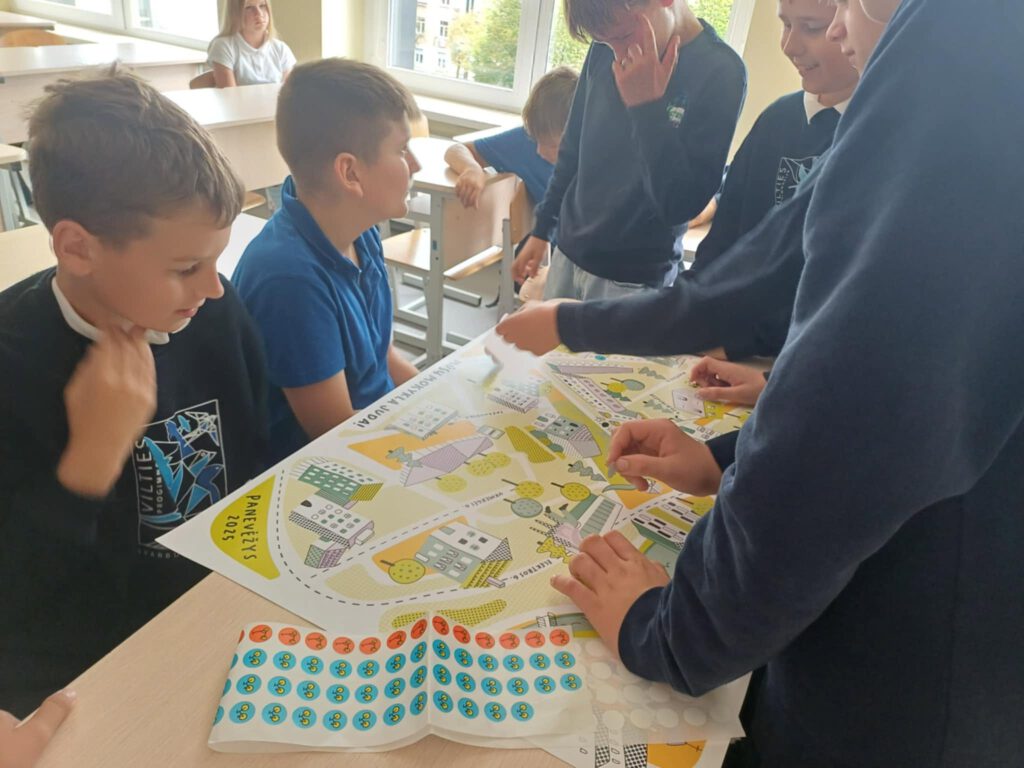
Students recording their active journeys during the “Our School Moves 3.0” challenge
The challenge continued the school-based activities tested in Panevėžys within the SUMPs for BSR project. The city’s approach combined three closely linked elements: mobility data collection, the installation of bicycle and scooter parking infrastructure, and engagement of school communities to encourage active travel. Bicycle and scooter racks were installed at the ten schools, while surveys and monitoring were used to better understand how students travel to school and how the new infrastructure is used. The data collected also supports the monitoring and further development of the city’s Sustainable Urban Mobility Plan (SUMP).
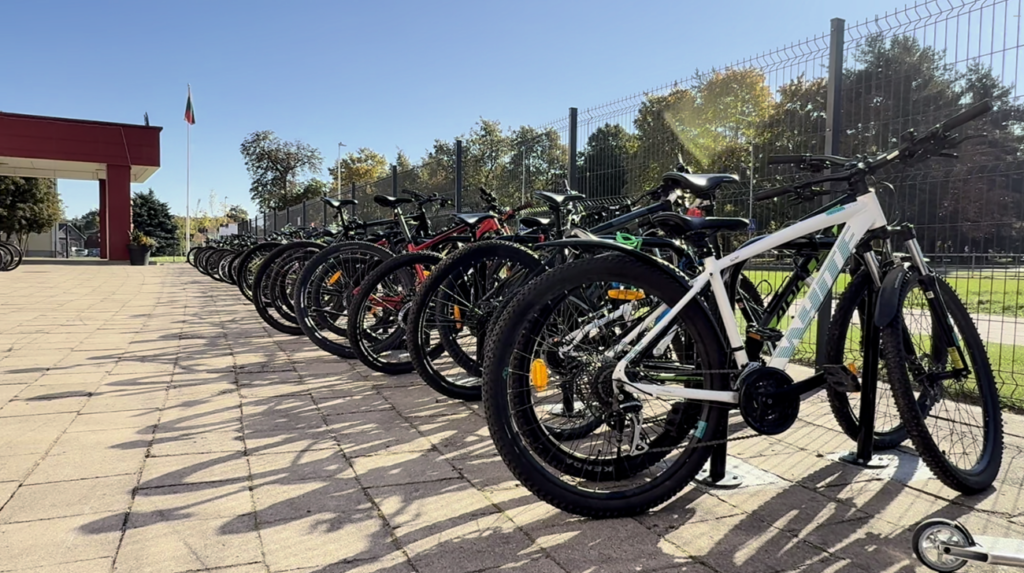
Bicycle and scooter racks in active use during the challenge
“Our School Moves” complemented these measures by encouraging students to use of active mobility options in their everyday journeys. Earlier project monitoring showed increased bicycle and scooter use during campaign periods, while at some schools the newly installed racks were fully occupied on certain days. The experience highlighted the value of combining infrastructure with communication and engagement rather than implementing infrastructure measures in isolation.
Schools played a central role in the initiative. They informed students and parents, appointed staff responsible for distributing stickers and following daily participation, while the Panevėžys city municipality administration provided posters, stickers and communication materials. Before the challenge, schools also reminded students about safe cycling and scooter use and relevant traffic rules. This reflected the wider approach of the project, in which school communities were involved not only in promotional activities but also in surveys, monitoring and decisions related to the placement of bicycle and scooter racks.
European Mobility Week and Interreg Cooperation Day
The initiative formed part of European Mobility Week 2026 in Panevėžys. On 22 September, Car-Free Day, students from all ten participating schools gathered in the city centre to mark the end of the challenge.
“Our School Moves 3.0” was also linked to Interreg Cooperation Day 2026, highlighting how cooperation through Interreg can support practical activities at local level. In Panevėžys, the SUMPs for BSR project provided an opportunity to work directly with school communities and engage thousands of young people in sustainable mobility.
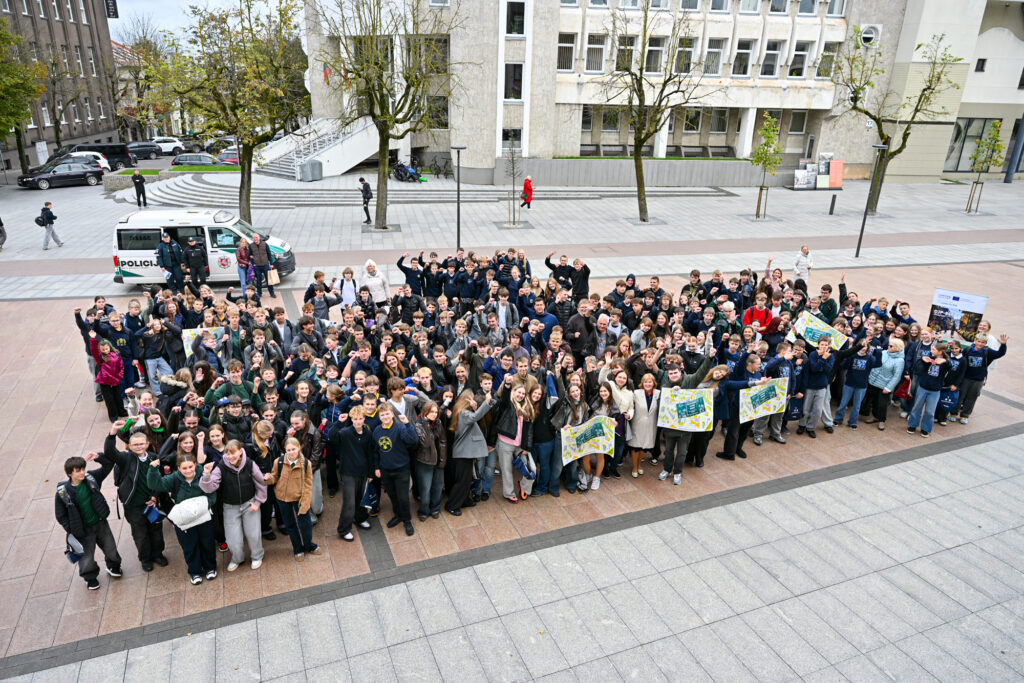
Around 300 students from the most active classes at the closing event of the “Our School Moves 3.0” challenge
Three editions of “Our School Moves”
“Our School Moves 3.0” was the third school mobility challenge organised in Panevėžys during the SUMPs for BSR project. Repeated school campaigns helped maintain engagement and increase the visibility of active mobility in school environments. Across all three editions, the basic idea remained the same: to encourage students to try cycling or scooting as part of their everyday journey to school and motivate them through a shared class challenge. Project experience also showed that school communities are willing to engage in mobility-related activities and can play an important role in both promoting active travel and supporting mobility monitoring.
Sustainable mobility and environmental education remained at the centre of the initiative, with additional educational activities organised for the most active classes. The first edition included a visit to the Bicycle Museum in Šiauliai with an interactive educational programme. The second took students to Vilnius University, where they met scientists and explored global environmental challenges such as climate change and sustainable mobility. Following this autumn’s challenge, around 300 students from the most active classes will take an educational trip to Anykščiai by narrow-gauge railway, combining rail travel with cycling and walking activities.
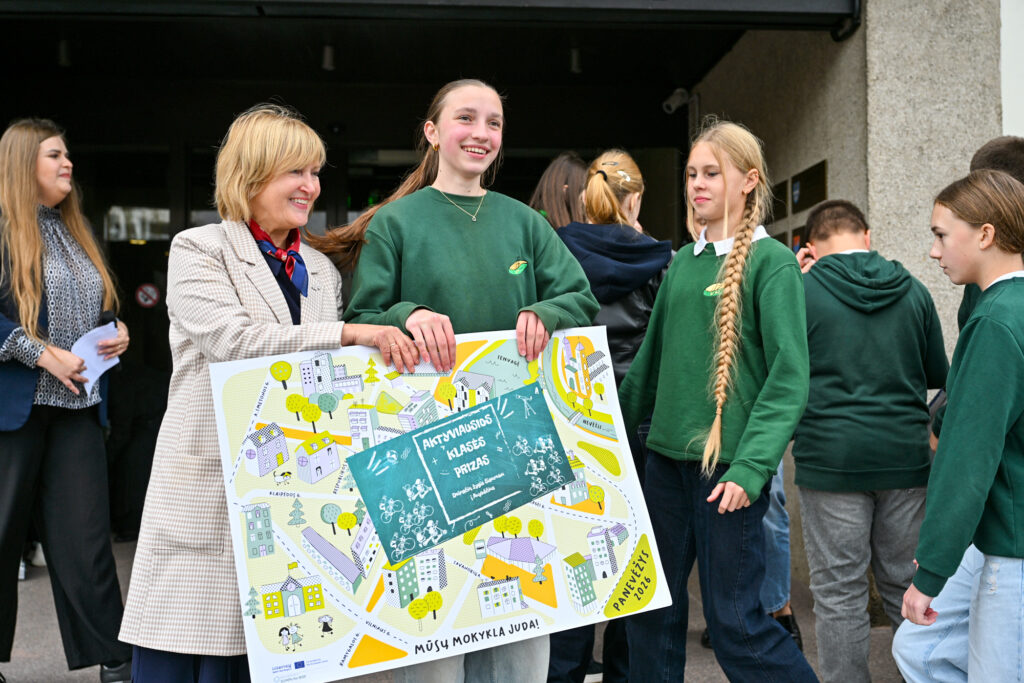
Panevėžys city Mayor congratulating students from the most active classes of the “Our School Moves 3.0” challenge
This third edition was also the final “Our School Moves” challenge organised within the SUMPs for BSR project, which concludes in autumn 2026. Over three editions, the initiative has shown how a simple format – clear rules, an easy way to record participation, cooperation with schools and a shared class challenge – can be used to encourage active travel among young people. At the same time, the wider school-based pilots showed that mobility habits change gradually and that infrastructure works best when supported by repeated communication and engagement activities. The experience from Panevėžys therefore points to the value of small but repeated steps in encouraging longer-term changes in everyday mobility.

Additional links
details
-
Homepage
-
Project typeCore Project
-
ImplementationNovember 2023 - October 2026
-
StatusOngoing
-
Contribution to EUSBSRPolicy Area Spatial Planning

-
Target groups
- Local public authority
- National public authority
-
Social media
-
Additional links
-
Tags