




Towards circular water systems – insights from IFAT Munich 2026
11 May 2026
Circularity is a must: rethinking wastewater treatment
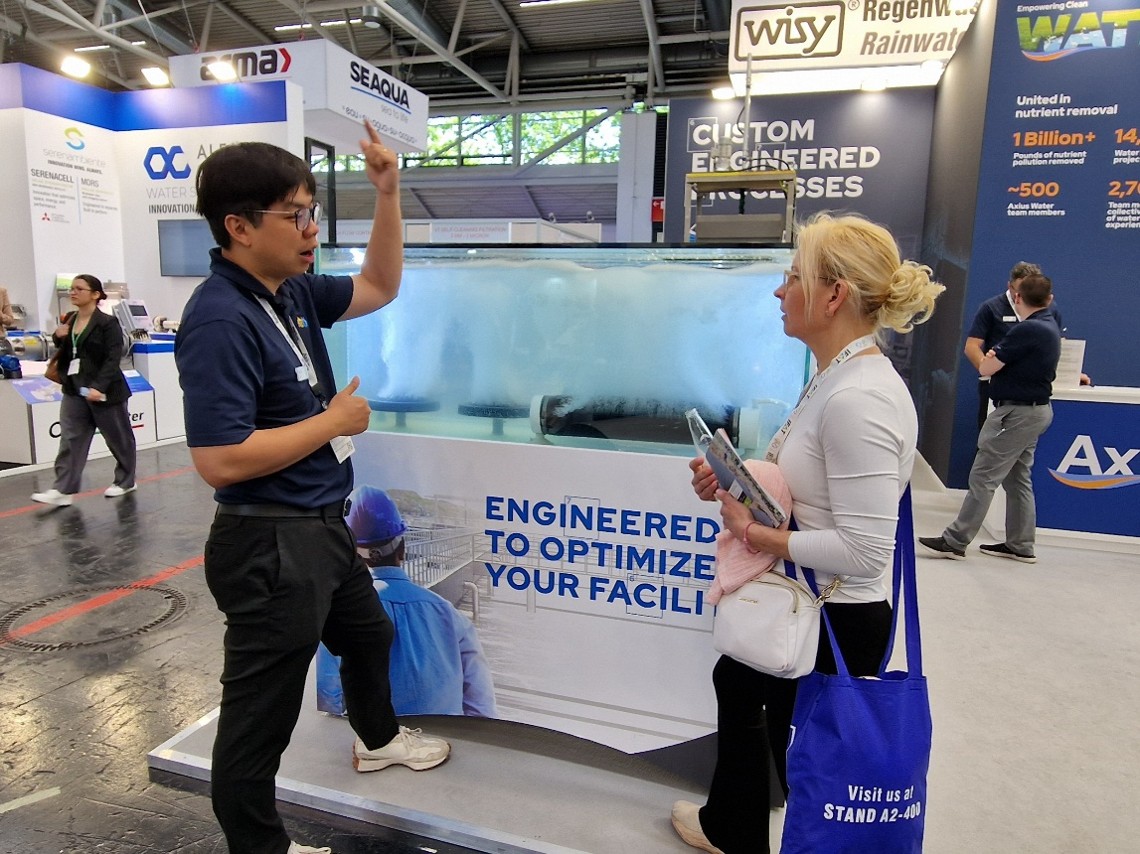
In May, NURSECOAST-II team visited IFAT Munich 2026 which is the world’s leading trade fair for environmental technologies. The event attracts approximately 142 000 visitors and 3400 exhibitors from over 160 countries. The event covered around 300 000 m² and highlighted the growing global importance of water, waste, and circular economy solutions. The central theme, “Circularity is a must,” emphasised water reuse, resource recovery, digitalisation, and resilient infrastructure in response to water scarcity and climate pressures.
The objective of the NURSECOAST-II visit was to assess small-scale and decentralised wastewater treatment technologies, identify recent innovations, and evaluate them through the framework of reuse, recycle, and recover, with a focus on approaches relevant to the Baltic Sea region.
Enabling resource-oriented water treatment
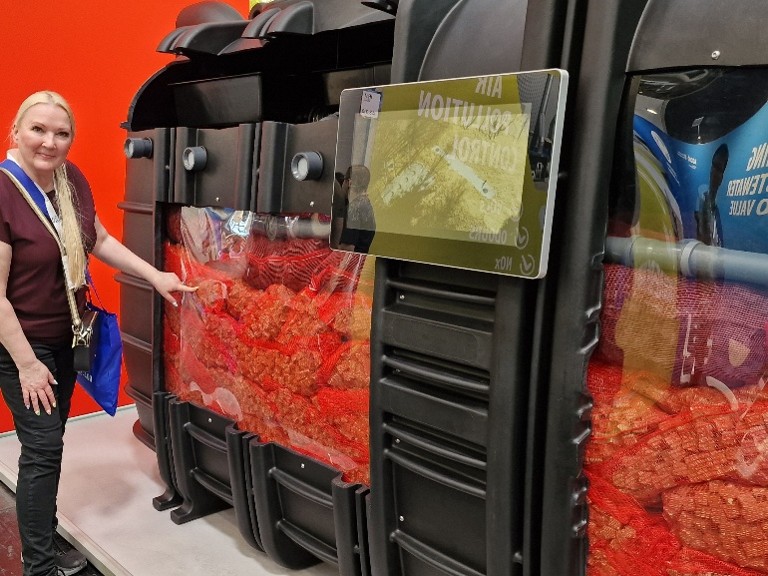
Biofilm-based processes such as Movin Bed Biofilm Reactor (MBBR) and Integrated Fixed Film/Activated Sludge (IFAS) remain the dominant technologies in compact wastewater treatment systems. These are increasingly implemented as modular and hybrid configurations, combining biological treatment with filtration or chemical polishing to meet stricter discharge requirements and enable reuse. Comparable to systems widely applied in the Baltic Sea region, these solutions typically integrate anaerobic and aerobic stages within compact units designed for decentralised applications.
A wide range of carrier and filter materials was observed. Plastic-based carriers (HDPE, PP) continue to dominate due to durability, performance, and long service life. Conventional MBBR carriers, such as Geotierre Newpond, represent mature and widely adopted solutions. At the same time, more advanced carrier designs (e.g. high-surface-area biofilm media such as Mutag BioChip) illustrate ongoing optimisation of biological processes, enabling higher treatment efficiency and more compact system design. Alternative materials, including mineral-based media and fibre-based filters (e.g. recycled PET), indicate gradual diversification but do not yet replace polymer-based solutions.
Several exhibitors (e.g. Aquato, Rototec and similar providers) focused on practical system integration, including tanks, prefabricated units, and modular solutions designed for ease of installation and low operational complexity. The overall emphasis was on robust, scalable, and cost-effective systems, rather than fundamentally new treatment concepts.
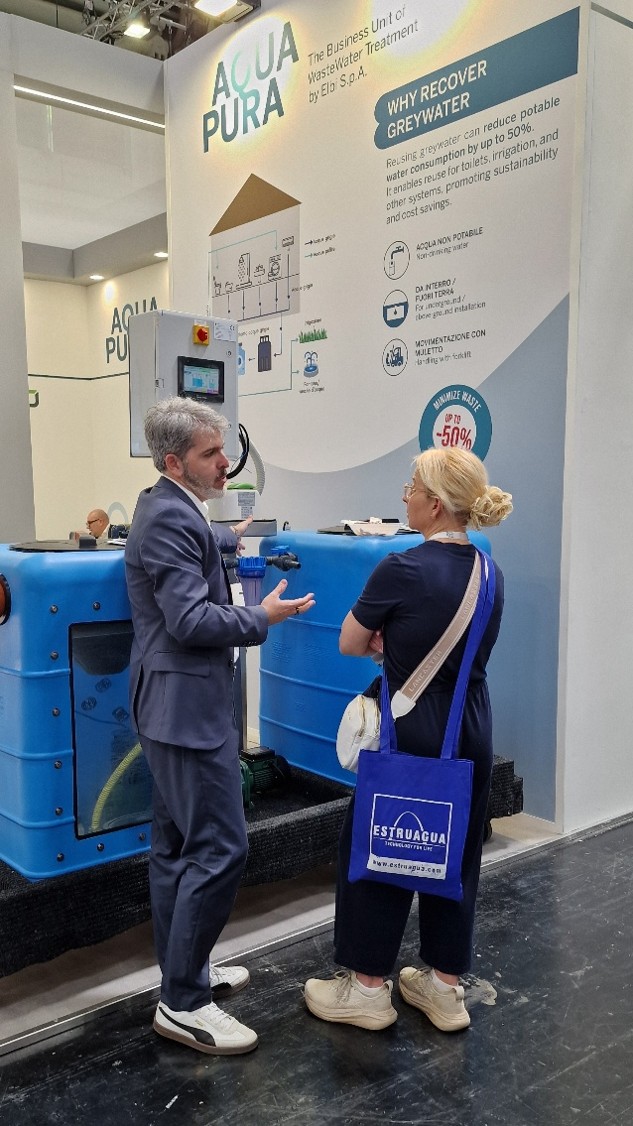
Within the circular economy framework, water reuse (reuse) was strongly represented. Decentralised reuse solutions, including greywater systems, are increasingly integrated into building and community-scale designs. Treated wastewater is thus regarded as a secondary water resource, particularly for irrigation, technical uses, and urban water management.
Resource recovery (recover) is also advancing, especially in relation to nutrient recovery (phosphorus and nitrogen) and energy production (biogas). These developments support the transition from wastewater treatment to resource-oriented systems.
Further innovations were identified in monitoring and process optimisation, including real-time sensors, digitalisation, and AI-based control systems. In addition, more environmentally friendly treatment chemicals, such as bio-based coagulants, are being developed to reduce sludge generation and environmental impact.
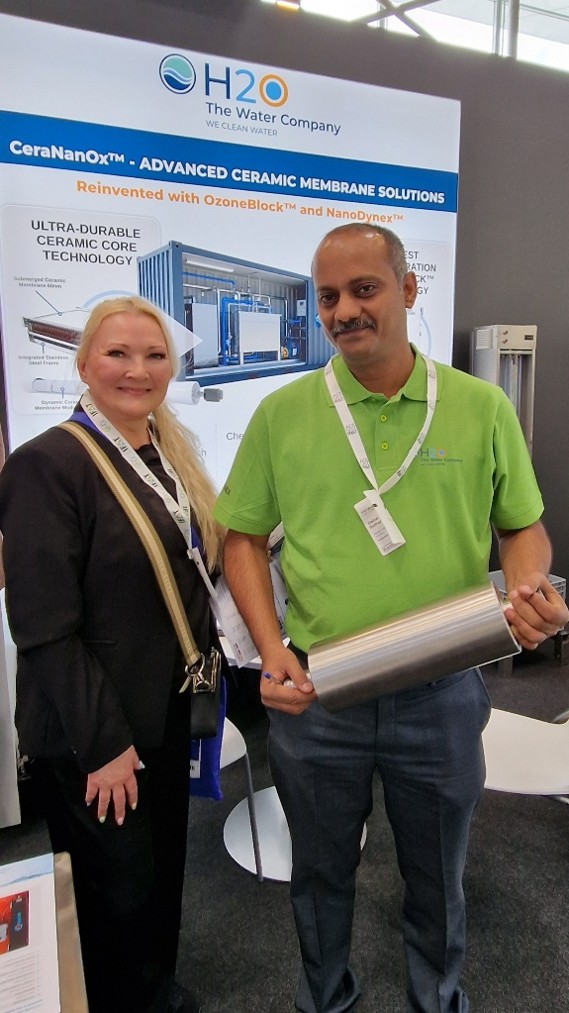
A major area of development was advanced membrane technologies. Large suppliers such as DuPont presented established but continuously optimised solutions including ultrafiltration (UF), reverse osmosis (RO), and membrane-aerated biofilm reactors (MABR), which enable high effluent quality and support water reuse in larger-scale systems.
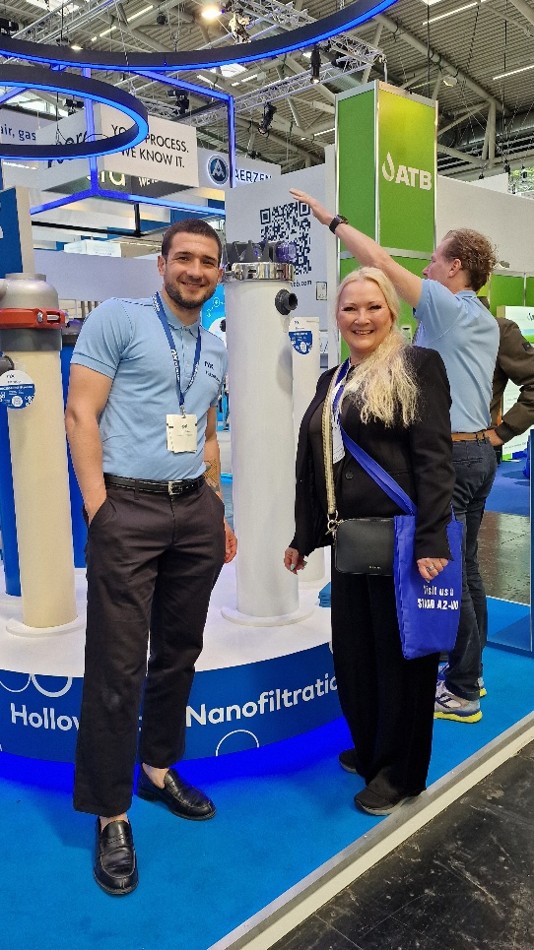
In addition, newer technologies such as direct nanofiltration (dNF) were highlighted. NX Filtration’s hollow-fibre nanofiltration modules (e.g. WRC200) enable single-step treatment of wastewater to high-quality reuse water, removing dissolved organics, micropollutants (e.g. pharmaceuticals, pesticides, PFAS), and colour without chemical pre-treatment or coagulation. This approach reduces process complexity, energy consumption, and chemical use, and represents a shift toward simplified, high-performance reuse solutions.
Key insights on circular water solutions
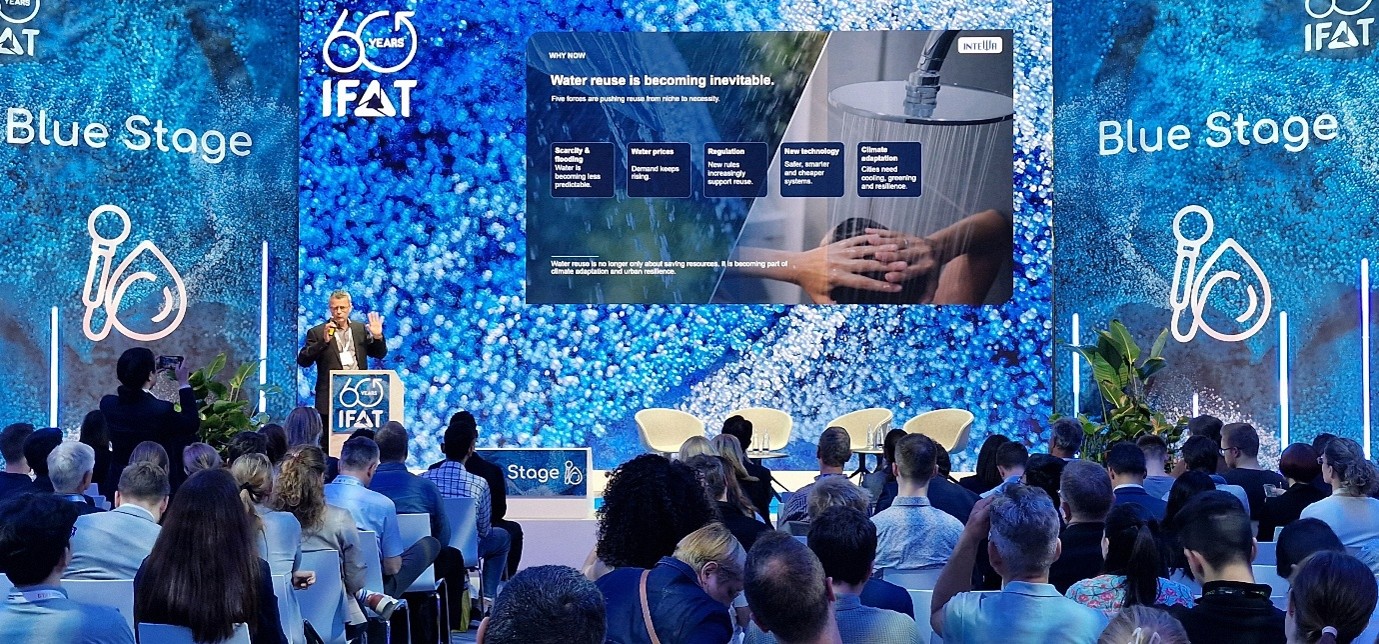
Across the different stages, IFAT 2026 highlighted wastewater reuse as a practical and increasingly scalable solution. Presentations, such as those at the Blue Stage, emphasized how wastewater can be transformed into a usable resource for irrigation, process water, and local water cycles. Case examples from companies such as Veolia, Siemens, and INTEWA demonstrated that digitalisation, energy efficiency, and process optimisation already enable cost-effective and high-quality reuse applications.
Overall, the event showed a clear shift toward integrated and resource-oriented systems, where reuse and resource recovery are embedded alongside conventional treatment. Technological development is driven primarily by the optimisation and combination of existing processes, supported by digital tools and improved system design. At the same time, advanced membrane technologies are extending achievable water quality, enabling broader implementation of reuse concepts.
Material solutions remain focused on durability and operational performance, although lifecycle considerations are gaining attention. Importantly, the technologies presented – from established biofilm systems to next-generation membrane processes -demonstrate that solutions for high-quality treatment, reuse, and resource recovery are already widely available.
The key challenge moving forward is not technological feasibility, but cost-effective implementation and large-scale adoption, particularly in decentralised systems. Continued progress is expected as these solutions mature, and future developments- highlighted at upcoming events such as IFAT 2028 – will indicate how rapidly circular water systems become standard practice.

Additional links
details
-
Homepage
-
Project typeCore Project

-
ImplementationJanuary 2023 - September 2026
-
StatusOngoing
-
Contribution to EUSBSRPolicy Area Nutri, Policy Area Tourism

-
Target groups
- Infrastructure and public service provider
- Local public authority
- Regional public authority
-
Social media
-
Additional links
-
Tags