




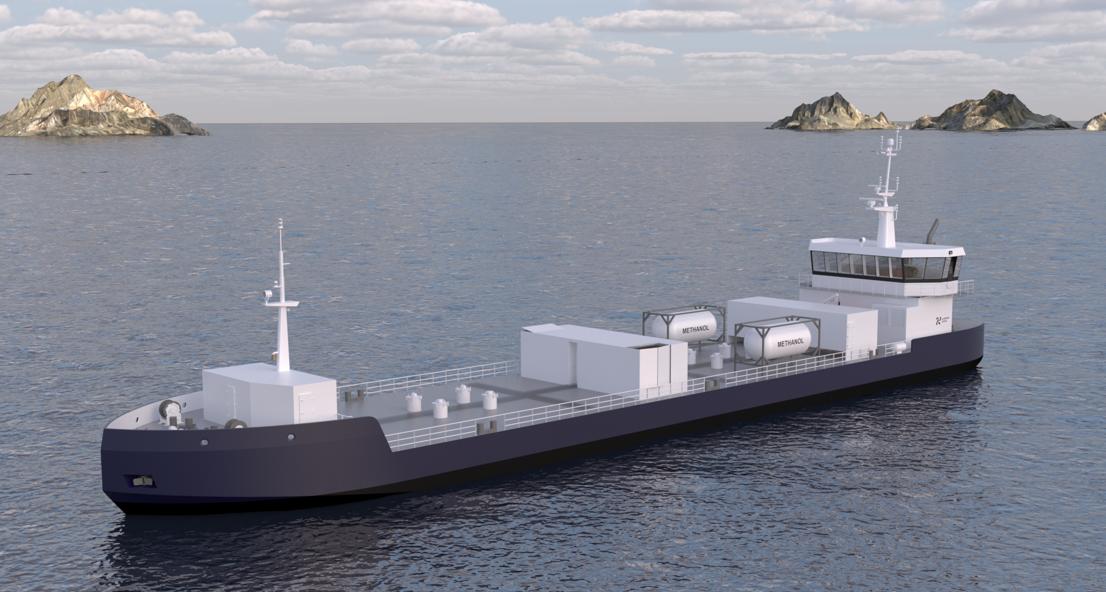
Advancing green methanol bunkering vessel specifications
15 July 2026
The workshop formed part of ongoing efforts to assess port readiness for alternative fuel supply chains and to translate market insights into practical vessel design requirements. It brought together stakeholders from ports, shipping, fuel supply chains, and technical consultancy to discuss key parameters influencing the development of methanol bunkering services. The discussions will directly support the refinement of the technical specification, which is expected to be further validated and finalised in early 2027.
Early-stage market development and infrastructure readiness
Participants highlighted that green methanol bunkering remains at a very early stage of development. While regulatory drivers at EU level and decarbonisation strategies of shipping companies indicate future growth, current demand for green methanol is limited and supply chains are still emerging.
Despite this, the workshop reinforced the importance of proactive preparation by ports. Developing infrastructure readiness, regulatory clarity, and operational concepts in advance was seen as essential to ensure that ports are able to respond once market conditions mature.
Key design and operational considerations
A central focus of the workshop was identifying port-specific and operational requirements that must be reflected in the design of a methanol bunkering vessel. Key considerations included:
- port size, layout, and existing bunkering infrastructure
- berth conditions, water depth, and navigational constraints
- storage availability and fuel handling capacity
- regulatory requirements at national and port level
- differing operational needs across customer segments such as container, Ro-Ro, cruise, and tanker traffic
Participants emphasised that vessel design cannot follow a one-size-fits-all approach and must be adapted to specific port conditions and operational contexts.
Infrastructure readiness and market constraints
The discussion also highlighted significant differences in infrastructure readiness across the Baltic Sea Region. While some ports already handle methanol through existing terminal operators, others currently lack dedicated storage capacity or fuel handling systems. It was noted that the absence of sufficient green methanol supply and limited offtake agreements remain key barriers to immediate investment. Nevertheless, existing industrial methanol handling experience in some ports provides a foundation for future development of bunkering services.
Technical design principles for future vessels
Participants agreed on several guiding principles for future methanol bunkering vessel development:
- flexibility to operate across multiple regional ports
- dual-fuel capability, including transitional fuels such as bio-methane
- retrofit potential to accommodate future regulatory requirements
- suitability for different port and customer profiles
- consideration of short turnaround operations and safety requirements
Commercial viability was identified as a critical factor, particularly for single-port dedicated vessels. Alternatives such as retrofitting existing bunker vessels or using truck-to-ship and barge-based solutions were also discussed as transitional options.
Outlook: towards validated technical specifications in 2027
The outcomes of the workshop will contribute directly to the ongoing development of the technical specification and design concept for a green methanol bunkering vessel under H2Deri@BSP. The specification will be further refined through stakeholder feedback and validation activities and is expected to be finalised in early 2027.
By combining technical analysis, stakeholder input, and market assessment, the H2Deri@BSP project continues to support Baltic Sea Region ports in preparing for the safe and scalable introduction of hydrogen-derived fuels.

Additional links
details
-
Homepage
-
Project typeCore Project

-
ImplementationMarch 2025 - February 2028
-
StatusOngoing
-
Contribution to EUSBSRPolicy Area Energy, Policy Area Ship

-
Target groups
- Business support organisation
- Infrastructure and public service provider
- Large enterprise
-
Social media
-
Additional links
-
Tags