

This wrap-up has been compiled by the Programme
PROGRAMME 2021-2027
Priority 3 Climate-neutral societies
Objective 3.3 Smart green mobility
BAB:
Wrap-up of project achievements
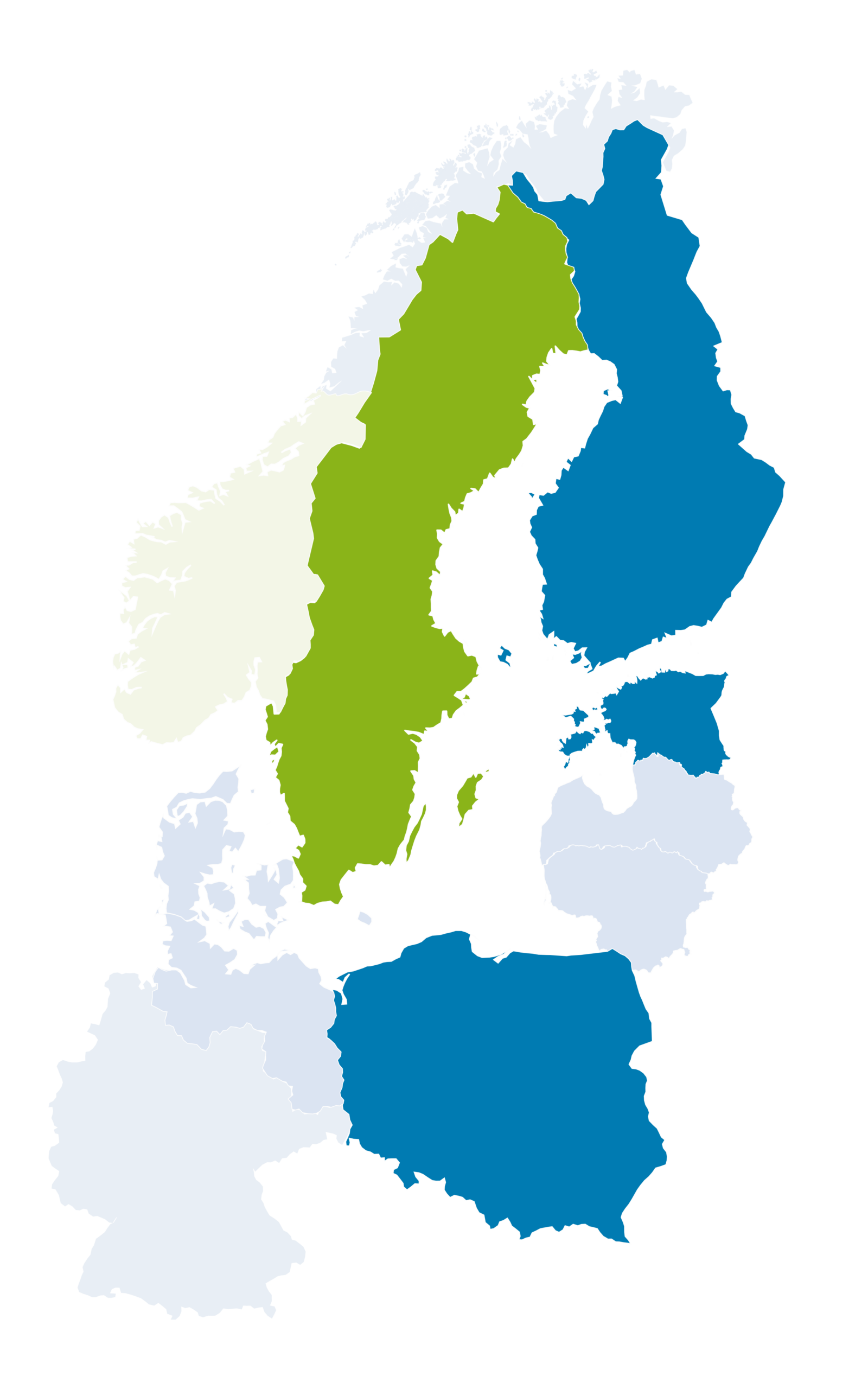
The EuroVelo 10 biking route connects countries around the Baltic Sea, but route development and information are not yet harmonised. The Interreg project BAB helped public authorities, NGOs and tourism organisations in Estonia, Finland, Poland and Sweden improve selected sections with more consistent route information, a common framework for route development and stronger coordination across borders, making journeys easier for cyclists to plan and navigate.
Solutions
BAB
Highlights
BAB
In a nutshell, the project delivered the following:
- Harmonised Route Information for cyclists
Route assessments for consistent route descriptions in Finland, Sweden, Estonia and Poland and a map of ferry connections - A common framework for developing cycle route
A benchmarking guide and self-assessment tool for authorities and route developers to evaluate their work and identify areas for improvement - Policy impacts and stronger EuroVelo governance
BAB recommendations for regional and national policy processes; the establishment of Poland’s National EuroVelo Coordination Centre (NECC)
Harmonised Route Information for cyclists
Harmonised Route Information for cyclists
To improve the quality and consistency of information available along EuroVelo 10, the BAB project carried out route inspections and assessments on selected sections of the route in Estonia, Finland, Poland and Sweden. Joint work of municipalities, tourism organisations, SMEs and cycling experts across Finland, Sweden, Estonia and Poland made this effort possible.
The assessments examined route alignment, signposting, services, attractions, and public transport connections in line with the needs identified in each partner country. The findings fed into updated and harmonised route descriptions on the main EuroVelo 10 website that now include detailed route information, maps, photographs, and practical travel tips. The project also mapped ferry connections to improve travel and route accessibility.
The updated descriptions are now available through national cycling and tourism platforms and linked to the European EuroVelo website. They help cyclists plan their journeys and support tourism organisations and authorities in promoting and improving the route.
Learn more
Common Framework for Developing cycle Routes
Common Framework for Developing cycle Routes
Regional and local authorities often have different levels of experience in developing cycling tourism. This makes it difficult to apply common standards and create a consistent route across national and regional borders.
To tackle this, the BAB project developed a practical benchmarking guide and a self-assessment tool to help regional and local authorities evaluate their current practices and identify areas for improvement to develop cycling tourism routes.
Based on the EuroVelo certification standards and the experience of cycling tourism developers, the guide covers the entire route development process and includes the following areas:
- cooperation in cycling tourism and route development;
- infrastructure and cyclist-friendly services based on EuroVelo standards;
- role of public transport and cross-border connections.
The accompanying Excel-based self-assessment tool follows the same themes and enables users to assess their current situation before consulting the relevant sections of the guide for further information.
The solution was jointly developed by partners from Finland, Sweden, Estonia and Poland and refined through workshops with municipalities, regional authorities and other beneficiaries. It can be applied in regions with different levels of experience and used at different stages of route development.
The project introduced the guide and self-assessment tool at several events. Project partners, regional authorities and route developers are already using them. The partners also identified consulting companies involved in cycling-route development as an important group for their further use.
Get inspired
Interreg pays off
BAB solutions in use
BAB solutions in use & policy impacts
Thanks to Interreg funding and cooperation across borders, BAB turned selected EuroVelo 10 sections in Finland, Poland, Estonia and Sweden into a more coordinated and visible cycling tourism route.
Regional and local authorities, tourism organisations, NGOs and SMEs now have harmonised route information, a common framework and practical tools for route development, and recommendations for stronger coordination. They already use these solutions to improve cycling routes and information for cyclists and can continue applying them after the project ends.
The results can also support other regions in developing cycling tourism, helping make routes around the Baltic Sea more consistent, connected and easier for cyclists to use.
BAB also strengthened the role of cycling tourism in regional and national policies. Through peer-learning workshops and stakeholder cooperation, the partners developed recommendations that fed into ongoing policy processes.
A major achievement was the establishment of a National EuroVelo Coordination Centre in Poland in 2025. Discussions on similar structures advanced in Sweden, Finland and Estonia. In Estonia, it supported securing the role of cycling tourism in the National Cycling Strategy 2040. In Finland, the project prepared national policy recommendations for cycling tourism development.
At the European level, the project also contributed to discussions on the revision of EuroVelo standards through input to the European Cyclists’ Federation.
In numbers
6 organisations cooperating across borders
74 organisations directly benefitting from project solutions
In focus
Small stories, big gains
Interreg pays off: BAB
The Baltic on two wheels
The cycling route for your bucket list
EuroVelo 10 stretches more than 9,000 km around the Baltic Sea, weaving together coastlines, archipelagos, sandy beaches, harbours and picturesque towns. Yet in Sweden, much of this remarkable route has remained largely unknown, even as interest in cycling tourism reaches new heights.
That’s where the Interreg Baltic Sea Region BAB project stepped in. By assessing more than 630 km of the Swedish route through a cyclist’s eyes – from road surfaces and signage to places to eat, stay and explore – the project identified practical improvements and revealed the route’s tourism potential. It also strengthened links between transport and tourism organisations across borders, helping Sweden become a recognised cycling destination.
Sweden did not work alone. Through BAB, partners from Estonia, Finland, Poland and Sweden shared their experience in developing cycling routes, visitor services and route promotion towards making EuroVelo 10 a seamless cycling experience across the entire Baltic Sea region.
Project
Details
Project type
Small project
Project duration
August 2023 – July 2025
Contribution to the EUSBSR
PA Tourism
Budget in million
EURO
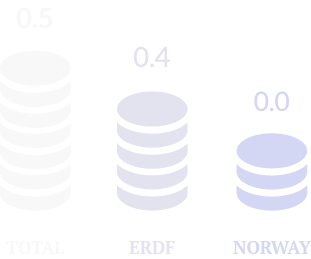
Involved
Countries
Lead partner
Project partners