




Äspet Stone Reef (Sweden)
29 June 2026
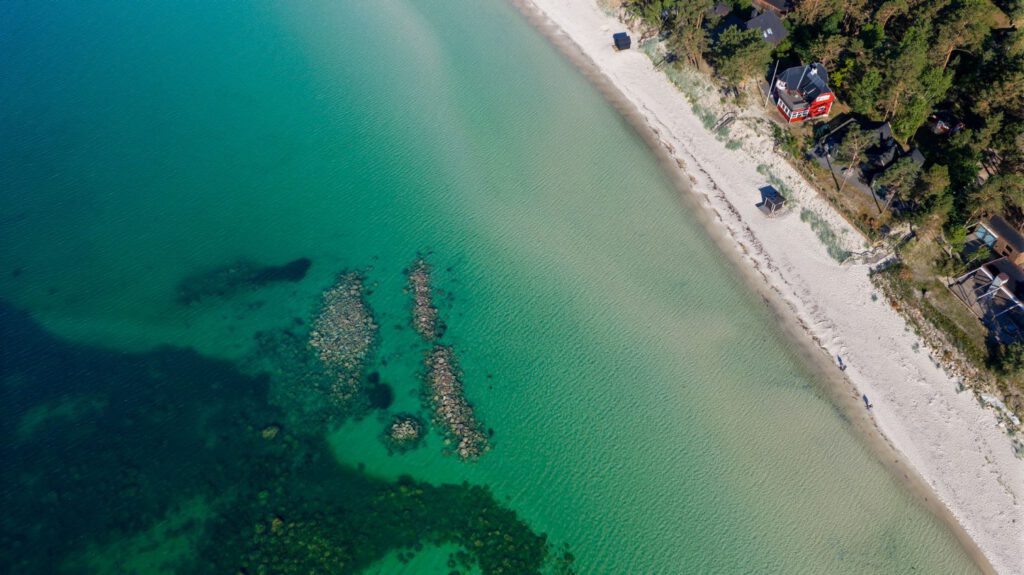
The stone reef at Äspet, located off the coast of Åhus, represents a nature-based solution designed to enhance marine biodiversity while also contributing to coastal protection. Photo: Kristianstads Vattenrike Biosphere Reserve
Key Focus
Stone reef restoration for marine habitat improvement.
Description
The Äspet Stone Reef and learning site is located off the coast of Åhus. Its placement has been determined in close collaboration with local fishing rights holders, drawing on their long-standing knowledge and observations of the area. The design is guided by the principle that the reef should enhance biodiversity while also providing a degree of coastal protection.
A Reef for the Future – Life, Learning and Coastal Resilience at Äspet
The stone reef at Äspet, located off the coast of Åhus, represents a nature-based solution designed to enhance marine biodiversity while also contributing to coastal protection. Positioned approximately 60 metres from the shoreline, the reef extends about 40 metres in a line parallel to the coast.
The reef has been carefully designed to mimic natural seabed structures, with variations in height and composition divided into several sub-areas with different physical characteristics. Its crest lies at mean water level, in line with nearby natural reef formations, allowing it to blend into the surrounding environment. The structure is built from natural stone, partly reused from former military bunkers that previously existed along the coast, thereby combining ecological considerations with resource efficiency.
Ecologically, the reef is intended to function as a habitat for a range of marine species, including bladderwrack, fish, mussels and small invertebrates. Its structural complexity creates favourable conditions for biodiversity by providing shelter, feeding opportunities and spawning grounds. Over time, the aim is for the reef to support a richer and more resilient coastal ecosystem.
In addition to its ecological role, the reef is designed to explore potential coastal protection benefits. By influencing wave energy and sediment transport processes, it may contribute to the accumulation and retention of sand on the shoreward side, between the reef and the beach. This could help create a natural buffer against erosion, particularly during storm events when sand is typically transported offshore.
The development of the reef has been shaped by collaboration and knowledge exchange among multiple stakeholders. Fishing rights holders have contributed historical insights into the area, informing both the selection of location and the overall design. Local diving associations have provided valuable observations of seabed conditions, while ongoing dialogue with the County Administrative Board has ensured that regulatory requirements are met.
The Äspet stone reef represents a collaborative effort among multiple stakeholders and has received funding from the EU Interreg programme, the Finnish John Nurminen Foundation and Kristianstad Municipality.
The site also serves as a platform for learning and engagement. Through field visits, educational activities and continued involvement of schools, organisations and the wider public, it contributes to a deeper understanding of how nature-based approaches can support both ecological and societal needs in coastal areas.
Location
The stonereef is placed off the coast of Åhus. The learning site is placed in connection to the Vattenriket visitor site Äspet.
Coordinates: Stonereef: 14.31 344, 55.91 371, Learning site: 14. 32 080, 55.91 923
Partner
Kristianstad Municipality / Kristianstads Vattenrike Biosphere Reserve
Learn more

Interactive map showing pilot locations. Use the arrow keys to move the map view and the zoom controls to zoom in or out. Press the Tab key to navigate between markers. Press Enter or click a marker to view pilot project details.
Additional links
details
-
Homepage
-
Project typeCore Project

-
ImplementationNovember 2023 - October 2026
-
StatusOngoing
-
Contribution to EUSBSRPolicy Area Nutri

-
Target groups
- Higher education and research institution
- Interest group
- Local public authority
-
Social media
-
Additional links
-
Tags