





Introducing the CADS Tool: Empowering Cities on the Path to Climate Neutrality
19 June 2026
Cities and local public authorities across the Baltic Sea Region can strengthen their ability to plan and implement effective climate actions with the support of the Climate Action Decision Support (CADS) Tool, developed within the Interreg BSR project Climate‑4‑CAST. Designed as a practical and strategic instrument, the CADS Tool enables climate experts, cities, and municipalities to better understand, assess, and guide their pathways toward the EU’s 2050 climate neutrality goal.
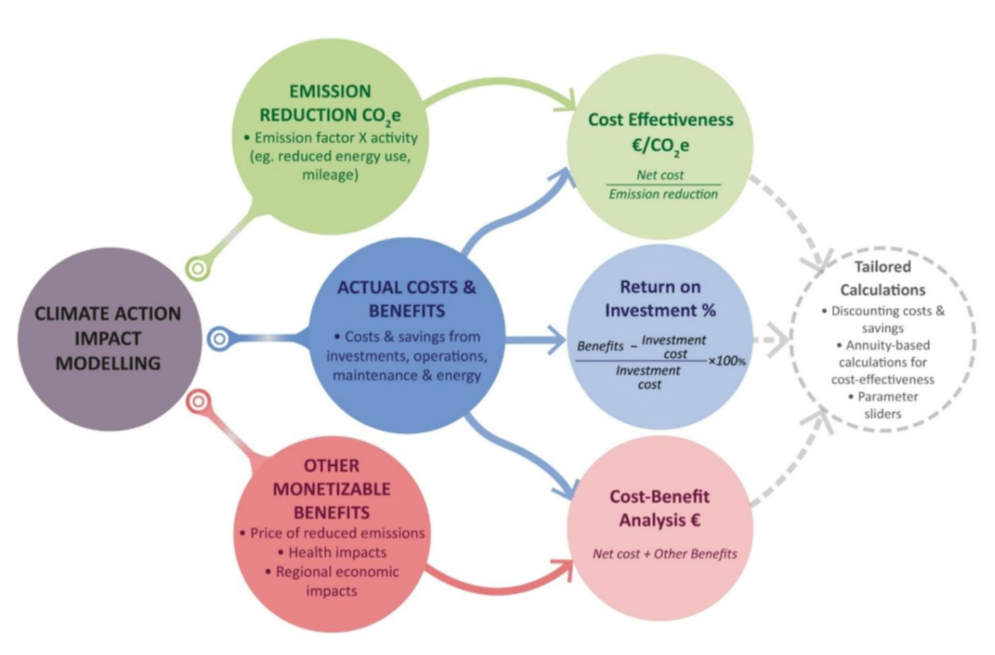
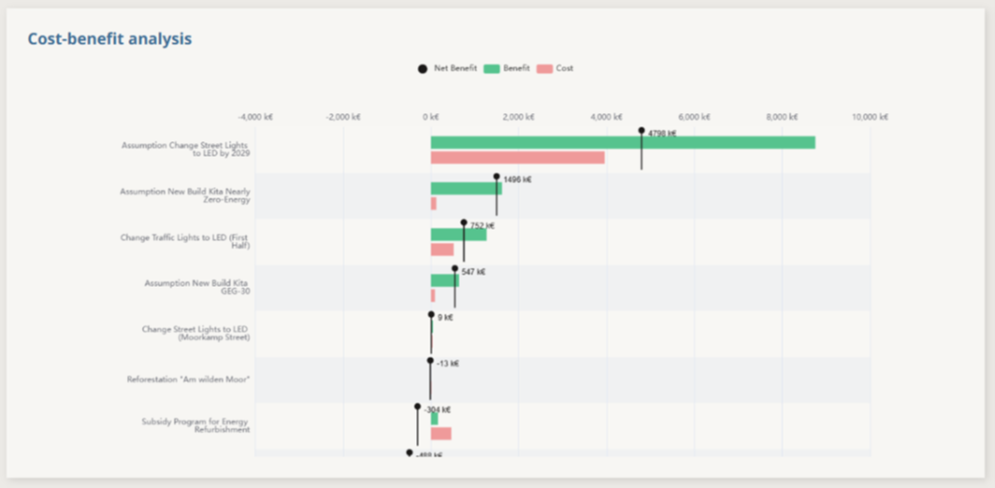
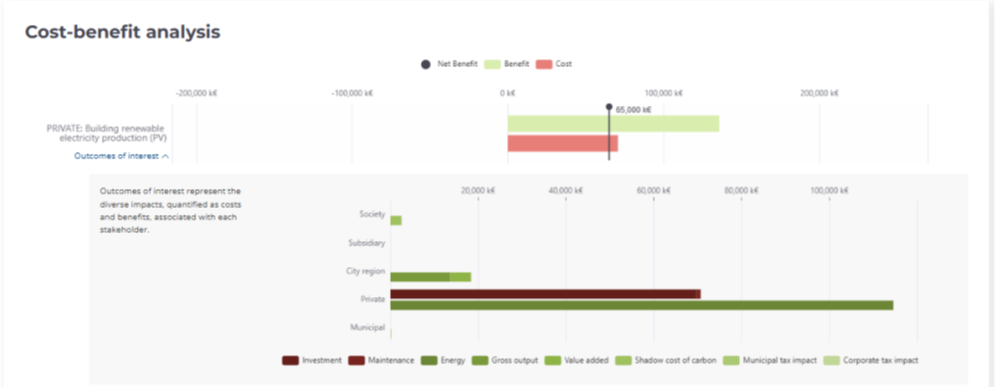
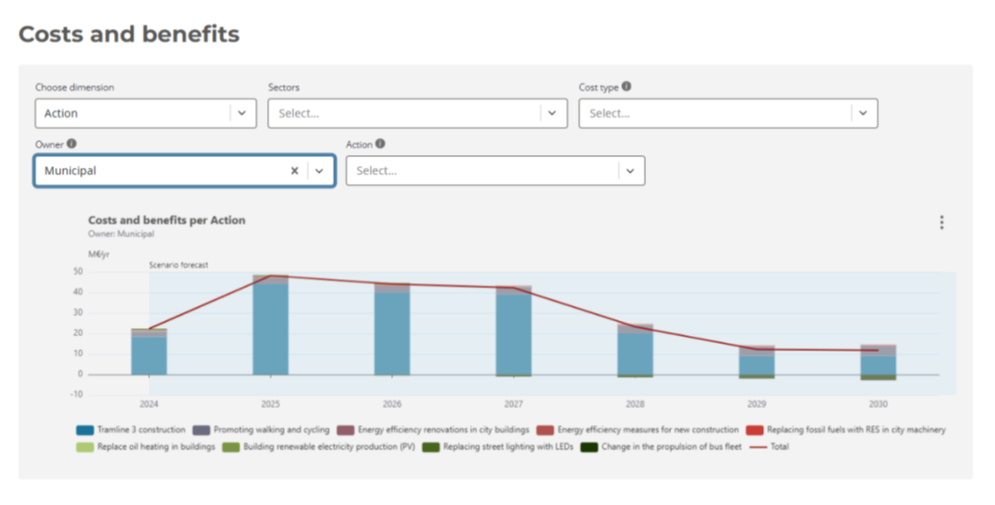
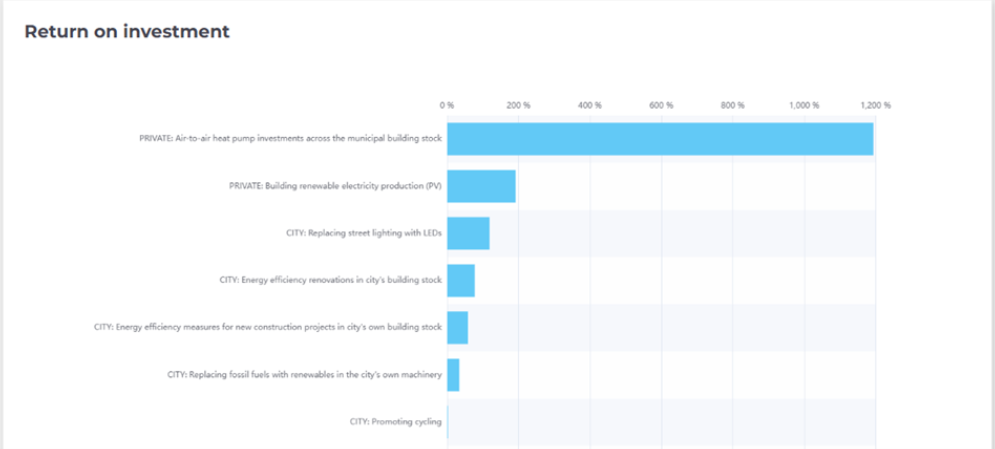
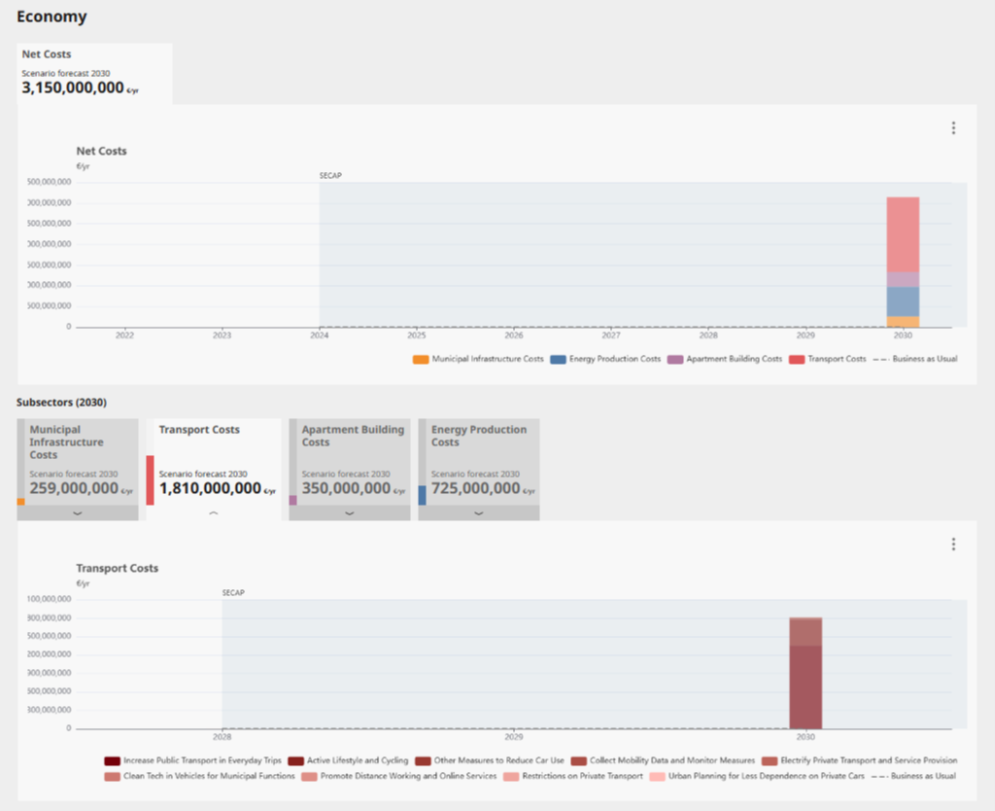
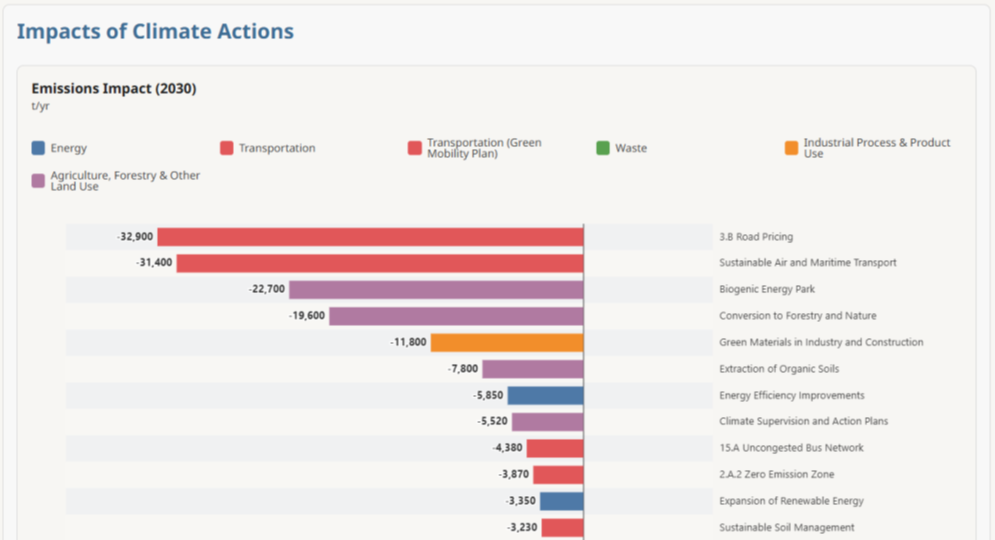
At its core, the CADS Tool combines two key analytical capabilities that support informed and transparent decision-making. First, it allows users to model and compare climate actions, including their emission reduction impacts, costs, energy savings and other monetisable benefits. Tailored functionalities such as discounting of economic impacts, annuity calculations, and adjustable parameters allow users to reflect different investment timeframes and assumptions, making the analysis more sensitive to real-world conditions. Second, it provides visualisations of city-level emissions development under different scenarios. Together, these functions enable cities to track progress toward climate targets, explore alternative development pathways, and identify remaining gaps in their climate strategies.
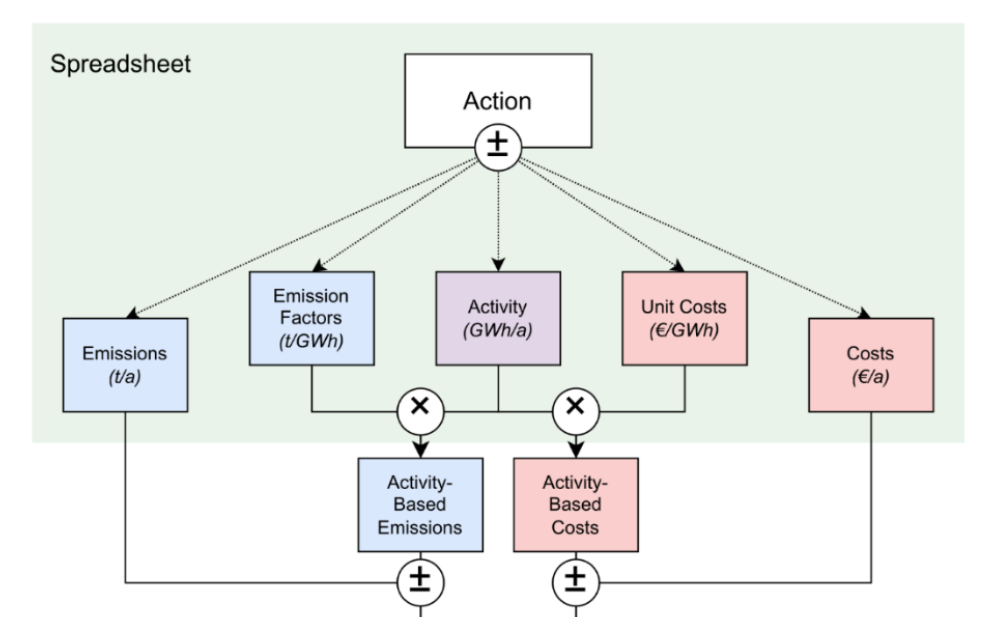
The modelling of climate actions is supported by clearly defined data inputs, including emission and economic impacts. The tool also recognises different types of action ownership. Cities can assess measures they implement directly, actions they influence indirectly, and broader activities carried out by other actors that contribute to achieving territorial climate targets. This flexibility allows users of the tool to tailor the scope of analysis to their specific governance context and policy ambitions.
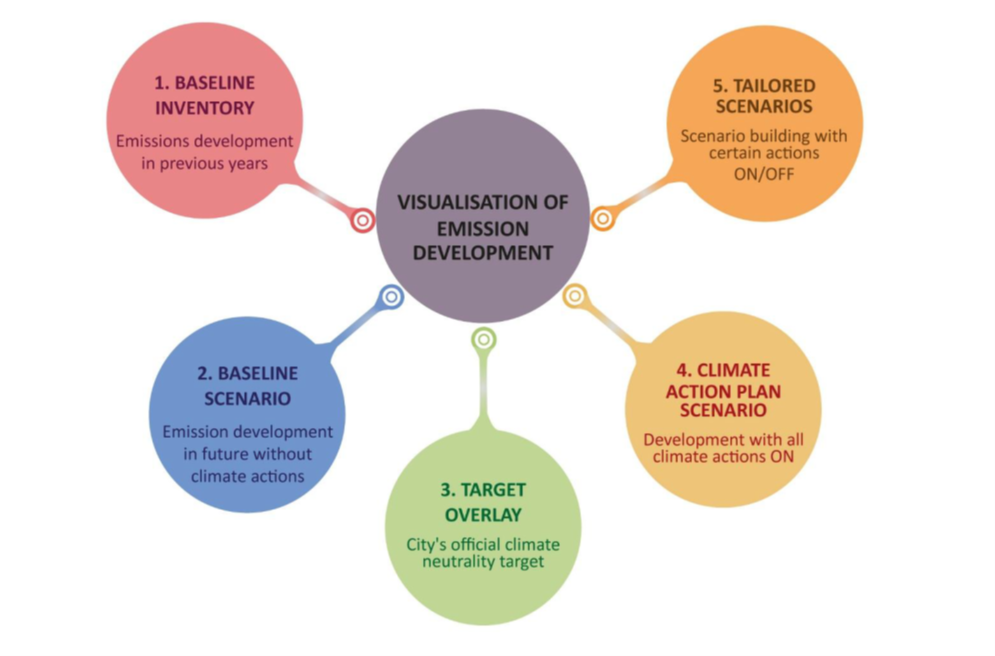
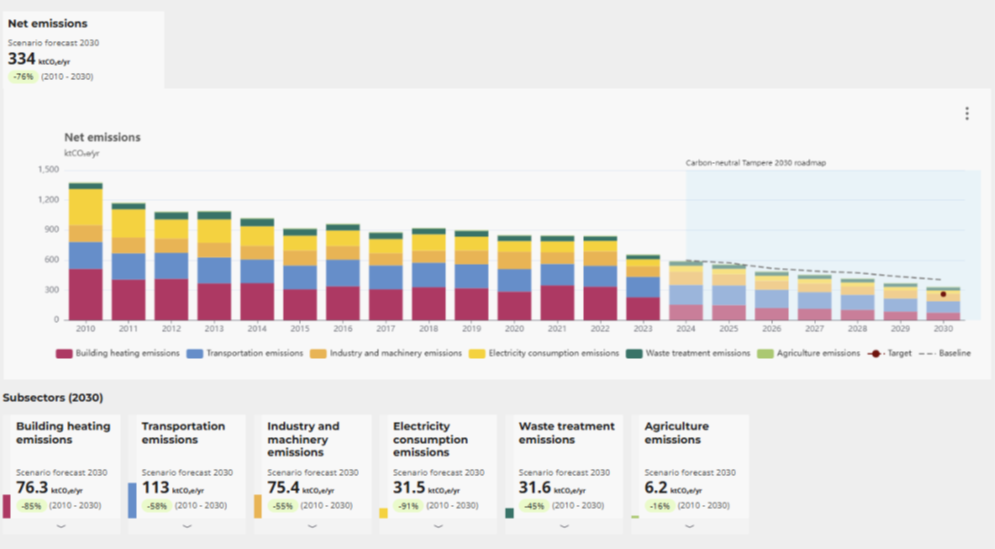
Beyond individual actions, the CADS Tool provides comprehensive insights into city-level emissions development. By combining baseline trends, implemented measures, and potential future actions, the tool creates scenarios that illustrate how emissions may evolve over time. Users can explore how current policies influence emission trajectories, assess whether planned measures are sufficient, and examine how additional actions could accelerate reductions. These scenario-based visualisations support strategic discussions and help communicate complex climate pathways in a clear and accessible way.
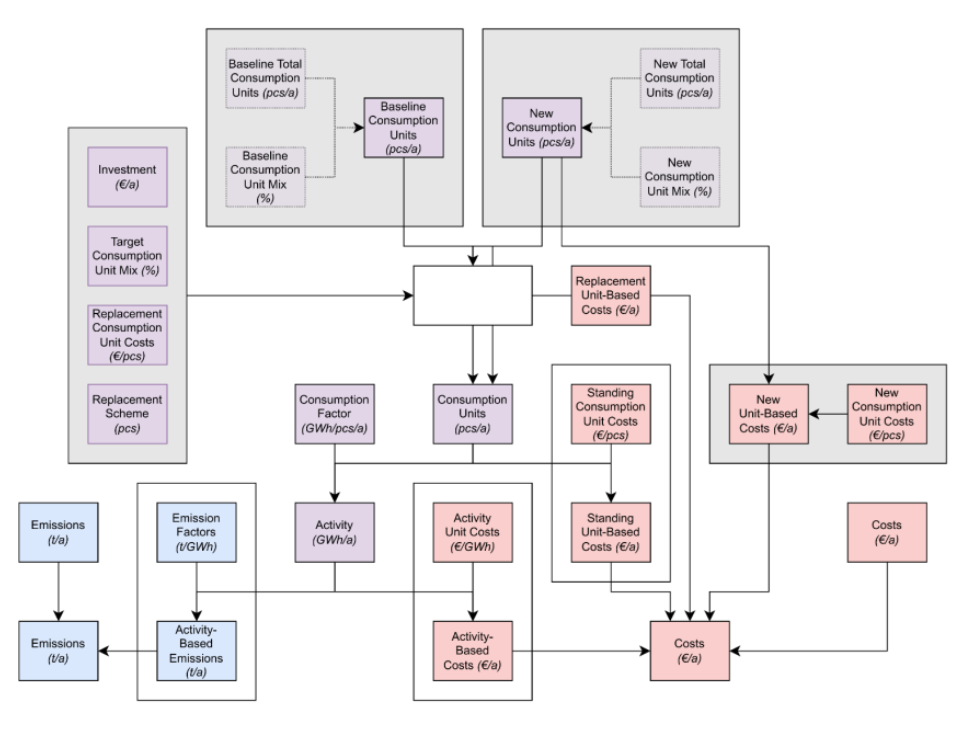
The tool also enables detailed exploration of emissions across sectors. Users can move from a high-level city overview to more granular insights into sector-specific trends, with the possibility to further break down data into sub-sectors depending on data availability. This hierarchical structure makes it possible to trace how individual actions affect activity levels and contribute to changes in emissions.
Transparency and consistency are fundamental principles of the CADS Tool. Its causal, node-based data logic ensures that calculations remain internally consistent while allowing users to understand how results are derived. Despite the technical complexity of the underlying model, the tool presents outputs in a structured and user-oriented way. This enables users to explore assumptions, compare scenarios, and assess combined effects of multiple actions without requiring direct interaction with the technical model.
A robust emission inventory and a well-defined baseline forecast form the foundation of the tool. These elements provide the reference against which all actions and scenarios are evaluated, ensuring that results are grounded in a consistent and credible data framework. The tool supports both simple and detailed modelling approaches, allowing cities to adapt the level of analysis to available data and specific needs.
In practice, cities benefit most when the CADS Tool is applied to concrete and recurring use cases. These include updating climate strategies, monitoring progress toward targets, planning investments, preparing budgets, and supporting political decision-making. By defining how and when the tool is used, cities can transform its analytical capabilities into operational value. Iterative testing of these use cases helps refine workflows, improve collaboration between departments, and strengthen trust in the results.
Integration into existing governance structures is another critical success factor. When embedded in decision-making processes, the CADS Tool becomes more than a technical platform. It serves as a shared evidence base that supports cross-departmental collaboration, enhances transparency in discussions with stakeholders, and strengthens the role of data-driven information in climate policy. This integration ensures that climate considerations are consistently incorporated into planning, budgeting, and strategic discussions.
The long-term impact of the CADS Tool depends on continuous use and regular updates. Cities that incorporate the tool into recurring processes such as monitoring and planning can maintain its relevance and accuracy over time. Regular updates to data, assumptions, and action impacts ensure that results reflect current conditions, while ongoing improvements allow the tool to evolve alongside changing needs. Establishing clear responsibilities and governance practices is essential to sustain its use despite organisational changes and political cycles.
The Climate‑4‑CAST project demonstrates that combining robust modelling, transparent data structures, and practical decision-support tools can significantly strengthen urban climate governance. The CADS Tool enables cities to better understand the implications of their actions, compare alternative pathways, and make informed decisions on their journey toward climate neutrality. At the same time, it fosters collaboration between climate experts, finance departments, sector units, and political leadership.
The CADS tool provides a structured and adaptable approach to navigating the transition as cities continue to face complex climate challenges. By linking analytical insights with everyday decision-making, the CADS Tool supports municipalities in turning climate ambitions into concrete, measurable, and economically informed actions.
Read more about the CADS Tool here

details
-
Homepage
-
Project typeCore Project

-
ImplementationNovember 2023 - October 2026
-
StatusOngoing
-
Contribution to EUSBSRPolicy Area Energy

-
Target groups
- Local public authority
- National public authority
- Regional public authority
-
Social media
-
Additional links
-
Tags