




Technologies for Society: An Interactive Garden Virtual Reality Experience
04 June 2026
Visitors of the Institute of Horticulture (Dobele, Latvia) will have the opportunity to put on VR headsets, explore public gardens across different development phases, and actively participate in their design.
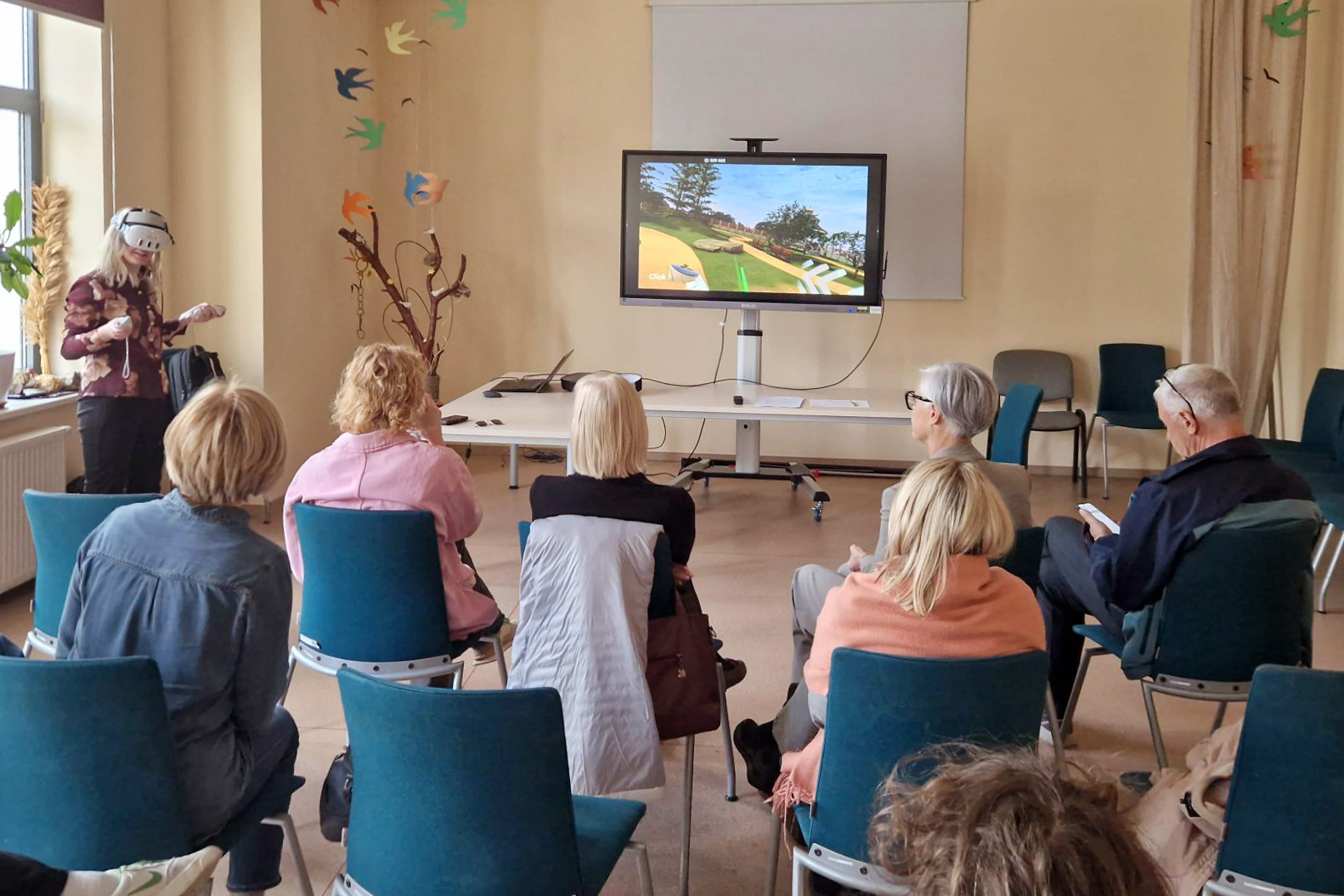
Specialists from the Virtual Reality Laboratory at Vidzeme University of Applied Sciences (Latvia) are currently developing a virtual garden model as part of the international “Interactive Gardens” project, and testing of the model’s demo versions model has begun.
The first VR garden testing event took place on March 23 at the Institute of Horticulture, bringing together project partners from Latvia. Following this, representatives of the local community – members of the Breeder Pēteris Upītis Society – were introduced to the VR experience. The testing phase then continued in Biržai, Lithuania, gathering colleagues from the Biržai District Municipality and the Aukštaitija Protected Areas Directorate.
A primary goal of the VR garden model is to offer the calming sensation of nature when accessing real outdoor spaces is not possible – for instance, for individuals with mobility challenges or indoor employees taking a break from their daily tasks. During the events, participants explored a virtual garden featuring various landscapes, weather conditions, and seasons. To gather valuable feedback, they recorded their feelings and recommendations in a specially designed questionnaire before and after the VR experience. This data will be directly used to refine and improve the model throughout the project.
Furthermore, an important technical feature of the developed model is its security and cost-efficiency. The entire virtual environment operates locally within the hardware (the VR headset itself), eliminating the need for external cloud services to ensure operation. Currently, the VR headsets for public engagement have been acquired by the Institute of Horticulture.
Ultimately, the finalized VR garden model is intended to serve a dual purpose: enhancing recreation areas in public institutions and social care centers, and acting as a modern tool to involve residents in spatial planning.

Additional links
details
-
Homepage
-
Project typeCore Project

-
ImplementationNovember 2023 - October 2026
-
StatusOngoing
-
Contribution to EUSBSRPolicy Area Innovation, Policy Area Tourism

-
Target groups
- Higher education and research institution
- Local public authority
- Regional public authority
-
Social media
-
Additional links
-
Tags