




KidsLikeUs Final Conference with the Keynote speech from prof. Rama Gheerawo
16 December 2025
KidsLikeUs – where Education, Design and Mental Health Meet
On 15 December 2025 the KidsLikeUs Final Conference gathered 65 participants from 15 countries for a meeting that joined together the worlds of education, design and mental health. Represented were educators and school leaders, designers, municipal representatives, and healthcare professionals in psychology and physiotherapy, along with accessibility specialists. The online event, organized by the lead partner with strong involvement from project partners, served as a platform to share successes, showcase practical tools, and reflect on how creative, inclusive approaches can support children’s resilience and wellbeing. Three interlocking themes were observed throughout the event: inclusive design, resilience-building, and trauma-informed practice for children. Cross-border collaboration and interdisciplinarity were easily recognized in every presentation.
We were extremely happy that prof. Rama Gheerawo, President of EIDD Design for All and former Director of the Helen Hamlyn Centre for Design, accepted our invitation for a welcome keynote speech. He is a world-class leader in inclusive design and accessibility, author of “Creative Leadership” and head of over 100 international projects. Prof. Gheerawo framed “Design for All” as a moral and creative force being a “love letter to the world.” He called for designers and leaders to engage directly with people across contexts, stressing four personal attributes learned from his parents that are essential to this work: kindness, presence, the pursuit of love over power, and the commitment to showing up for life. These qualities, he highlighted, are critical to creative leadership.
He also connected inclusive design to broader planetary responsibilities. Referring to the Gaia Declaration signed by EIDD- Design for All members, he emphasized that design briefs for people and the planet are inseparable: design work must be green, affordable, resilient and socially aware. Making design “for all” intensifies its potential to create systemic, compassionate change, a message that resonates strongly with the KidsLikeUs project mission, as he evaluated. Prof. Gheerawo explicitly recognized KidsLikeUs as embodying the Design for All approach. His encouragement to use creativity and empathy as levers for positive change validated the KidsLikeUs project’s co-creative methods and reinforced the commitment to inclusive, sustainable practices. The keynote left participants with a renewed sense of purpose and an inspiring framework for connecting empathy-driven values with practical actions in education, design and healthcare.
KidsLike Us project coordinator Beata Fabisiak recapped the project’s motivation and the collaborative model at its heart. KidsLikeUs prioritized co-creation with children, parents and teachers, ensuring that children with disabilities, neurodiversity and different language backgrounds were not an addition but central contributors. She stressed the value of cross-country cooperation: bringing together different educational traditions and lived experiences had generated richer, more adaptable solutions. A base line for this project has been empowering NGOs, public institutions, schools, and families to use creativity and nature-based approaches to support well-being and building resilience as a core competence for children.
One of the project’s flagship outputs is the Superhero Sensory Garden Ideas Collection, a framework that guides practitioners in designing sensory-friendly and safe spaces, encouraging resilience building. The framework is structured in three levels (basic, intermediate, and advanced), allowing teams to select interventions according to available budget, time and space. The goal is practical: to create safe, healing environments where children can learn to regulate emotions and build resilience through sensory engagement. As tangible proof of concept, KidsLikeUs established two permanent sensory gardens in Poland and Estonia, demonstrating how ideas translate into lived, teachable spaces. All project partners highlighted that scenarios, templates and tools developed through KidsLikeUs are freely available. This open-access approach encourages replication and adaptation across schools, NGOs and municipalities, lowering barriers for institutions that want to implement sensory gardens, activity scenarios or trauma-informed practices.
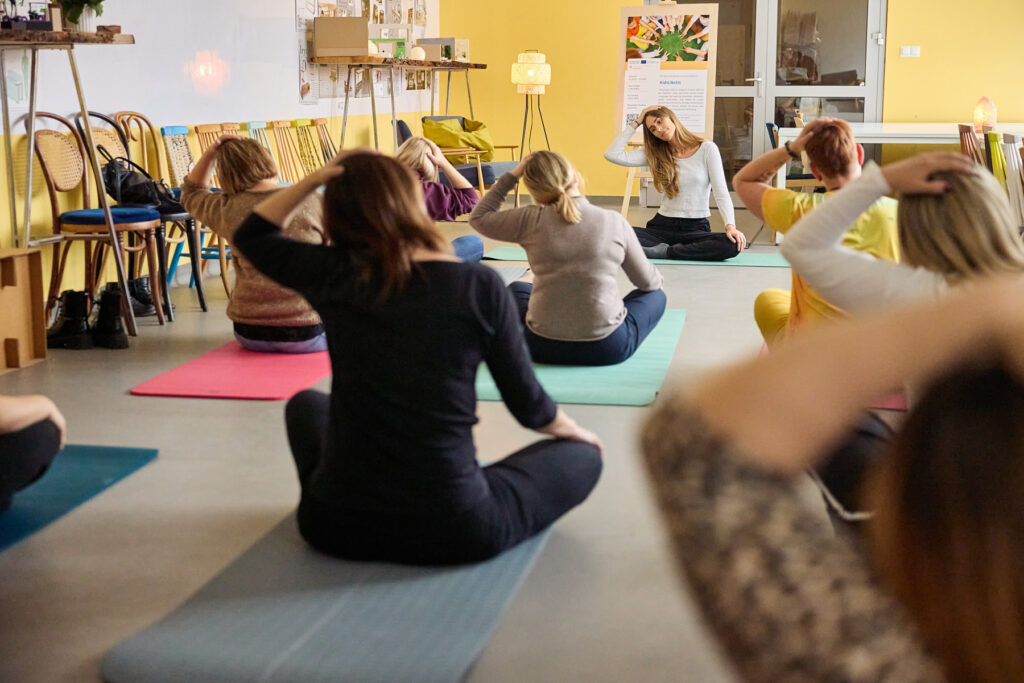
Trauma-Informed Yoga and Mindfulness Activities by Maya Lindvall (YogaYou, Sweden)
Maya Lindvall from YogaYou described a synthesis of playful children’s yoga and trauma-specialized yoga grounded in neuroscience. Her approach centers on nervous system regulation, personal choice, empowerment and safety. By combining engaging, playful movement with trauma-aware techniques, the program supports children to reconnect with their bodies and experience emotional safety without pressure or performance expectations. The trauma-informed yoga work showed measurable benefits, particularly for displaced and traumatized children from Ukraine. Through guided breathing, movement and playful self-awareness exercises, children developed improved emotional regulation and resilience. Maya Lindvall is author of two informational guides developed within the KidsLikeUs project to enable NGOs, schools and private practitioners to adopt the method. She reported strong uptake through trainings and larger community events, and notable progress among children who participated.
The program is organized around four core components: mindful breathing, movement, playful self-awareness and empowerment techniques. Sessions are intentionally non-authoritative and pressure-free, combining joy and mindfulness to create a nurturing, inclusive environment where healing and confidence can emerge naturally.
Art, Nature, and Physical Activity by Lotten Svensson and Henrik Helming (YogaYou, Sweden) and Rima Boškevičienė (SmarterStep, Lithuania)
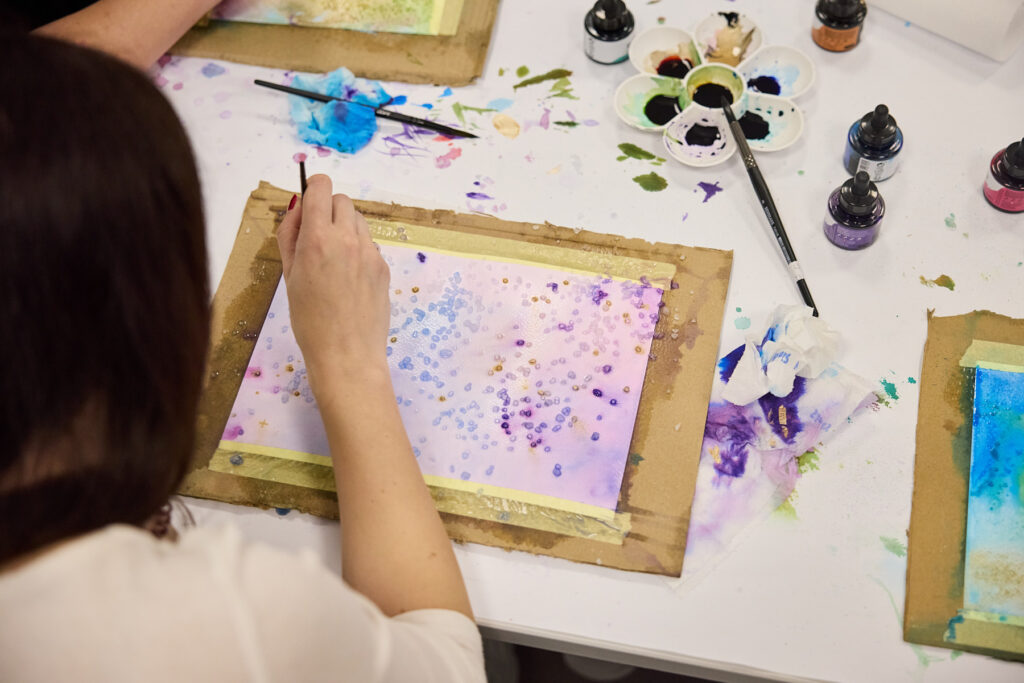
Art workshops and outdoor nature activities provided complementary pathways for feelings’ expression and coping. Facilitators Lotten Svensson and Henrik Helming used watercolor techniques and group vernissages to help children express emotions non-verbally and build pride through visible outcomes. Outdoor “Nature Calling” sessions taught basic survival and navigational skills, creating confidence through practical competence and group cooperation. Such activities were often adapted to include whole families, recognizing that healing and resilience are strengthened in relational contexts.
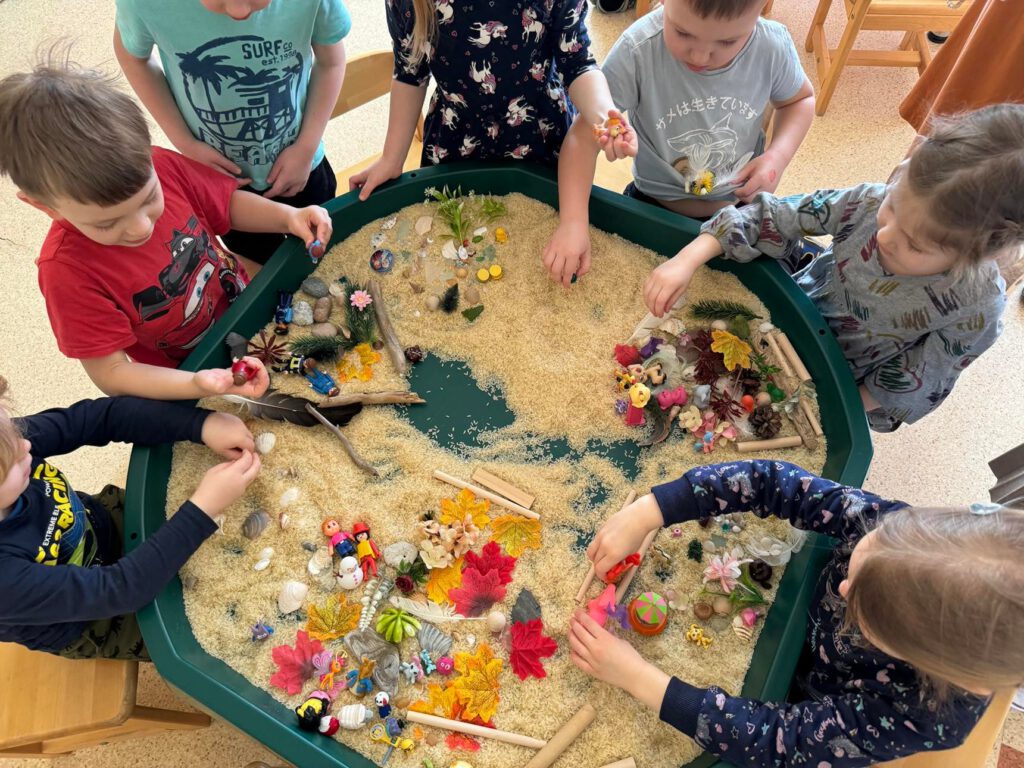
Rima Boškevičienė from SmarterStep in Lithuania highlighted the importance of body-based approaches when words are unavailable. The physical movement programs for ages 4–15 and sand therapy sessions developed within the KidsLikeUs project let children express internal states symbolically. These activities were intentionally low-cost and easy to implement in schools: movement primes the body to regulate, and sand therapy creates a tactile space for emotional expression. The practical nature of these interventions persuaded municipal leaders in Ukmerge to allocate budget for continued implementation in local schools, signaling a sustainable pathway from project pilots to public practice.
Creating Safe Worlds: 3D Printing Workshops for children by Beata Fabisiak (Poznan University of Life Sciences, Poland)
Beata Fabisiak presented an imaginative, practical aspect of activities built around 3D printing and a child-centred design challenge. The workshops invited children to invent their own “dream safe place”, a personal sanctuary that they could imagine, design and, most importantly, hold in their hands. The complexity varied depending on time availability: projects could be as small as a pocket-sized object or as elaborate as a village of tiny houses, trees, fences and gardens. But one thing remained constant: the objects were portable and children could really feel they have created “their safe place”, even a very tiny one. The workshop scenario combined the introduction on the tactile use of 3D pens, an open imaginative design challenge, and (if needed) template-based guidance that supports beginners step by step. These templates were created to be downloadable and printable so that any facilitator can prepare a simple workspace where children trace and build directly on a paper template, then personalize and extend their pieces.
Beata Fabisiak emphasized that those workshops are more than creativity and craft lessons; they are instruments of empowerment. By giving children the tools to shape their own miniature safe places, this activity reframes agency: when the world feels unfriendly or unpredictable, a child who can build a pocket-sized refuge learns that change is possible and that small, creative acts can restore a sense of control. Teachers reported outstanding changes in concentration: children who typically struggle to remain on task were captivated by the hands-on nature of 3D pen work and the visual immediacy of their results. Creating tangible items such as tiny furniture, mini gardens or small houses gave participants a tangible sense of ownership. When a child leaves the workshop with an object they made (and this refers to the art workshops as well), the artefact becomes both a symbol and a proof point, evidence that they can alter their environment. This psychological shift, from passive recipient to active maker, supports emotional regulation and builds a sense of empowerment.
Sensory Garden in the Nissi Primary School, Estonia presented by Kaire Luuk (Saue municipality, Estonia)
During the realization of the permanent pilot change in the Nissi Primary School an old school foundation platform was transformed into a sensory garden that retains historical value while giving the community a new, shared space for emotional learning and reflection. The design emerged from collaborative work between the municipality, school staff, project partners and local residents; this co-creation was essential to ensure the garden felt like “ours” rather than an imposed intervention.
The garden’s main themes, being reflection, emotional learning and self-support , were incorporated into the planting and the garden layout. Each plant was associated with an emotion and accompanied by small descriptive notices to help children articulate and understand their feelings. Paths and textures provide opportunities for healing through movement: playful stepping stones, circular walkways and gentle swings invite bodily engagement and mindful presence. A variety of tactile materials, like repurposed stone walls, gravel, sand-filled planters, soft grasses and weathered wood, give visitors things to touch, smell and explore. Colorful chairs and wooden elements reinforce learning about natural materials while creating welcoming spaces both for individual self-time of being present and conversations and togetherness. The emphasis on shared ownership means the garden is open to the whole community, turning a once-underused school area into a site of intergenerational care and educational activity.
Sensory Garden at the Poznan University of Life Sciences, Poland presented by Beata Fabisiak (Poland)
The sensory garden pilot in Poznan adopted a zoned approach that guides visitors through entry sequence, activity zones, focus zones and relaxation areas. A storytelling entrance, a colourful gates with overhead roofing and wind chimes, cues imagination and invites children to step through an imaginative threshold where they can try on new identities, such as “superhero” qualities, fostering play and self-discovery.
The sensory engagement path moves visitors from visual stimulation to tactile, olfactory and auditory experiences. Practical activities are embedded at nodes along the route: identifying material temperatures, smelling herbs to learn plant recognition, and tactile exploration that brings attention to the present moment. A tactile mural featuring 3D leaf shapes, stamped into concrete, was designed to be touched as much as seen: an intentional “design for all” choice that makes the garden accessible to children with different sensory preferences.
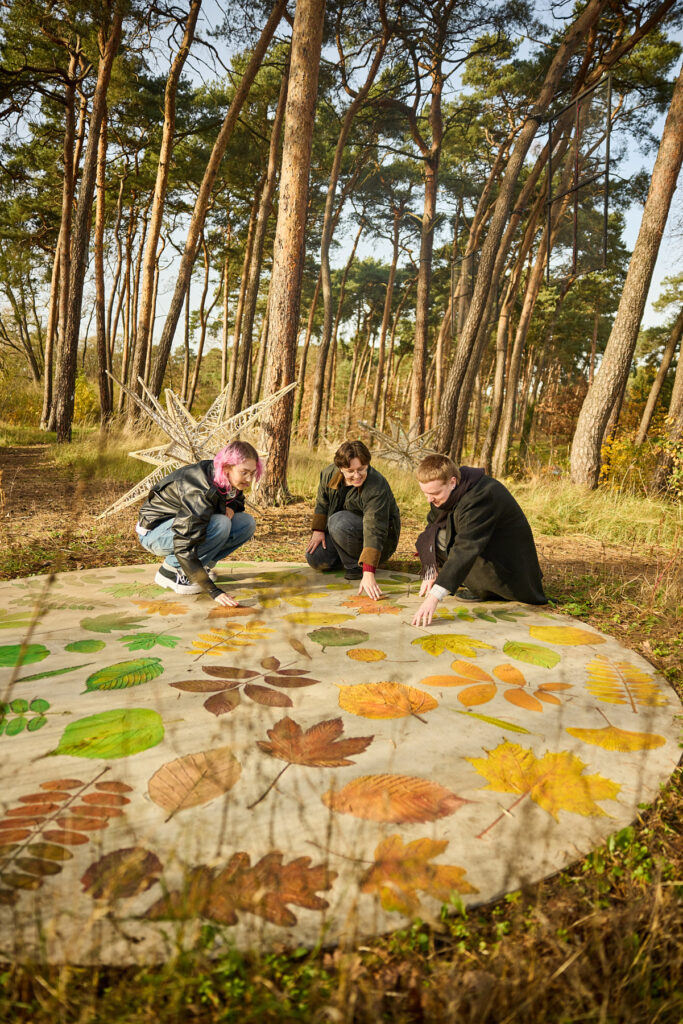
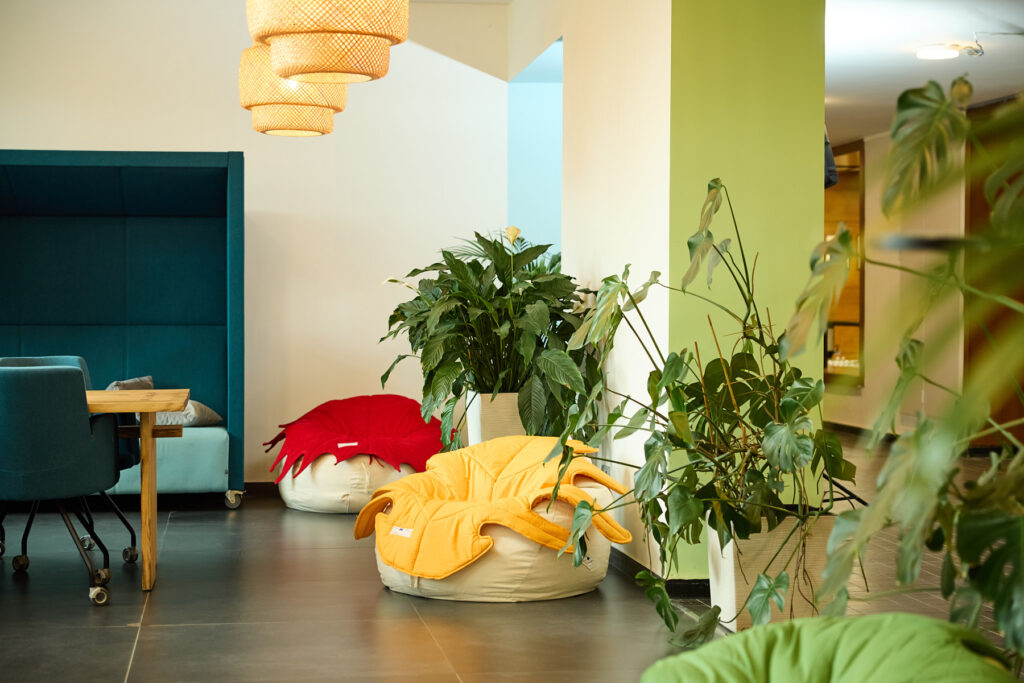
Beata Fabisiak presented also the furniture concepts for inclusive spaces developed within the KidsLieUs project.
For the indoor spaces nature-inspired sensory poufs have been developed and manufactured. They were created with children’s feedback and serve multiple functions such as seats, mats and comforting objects. Children felt really enthusiastic about the larger leaf shapes so they can hide and feel embraced, and designers iterated accordingly.
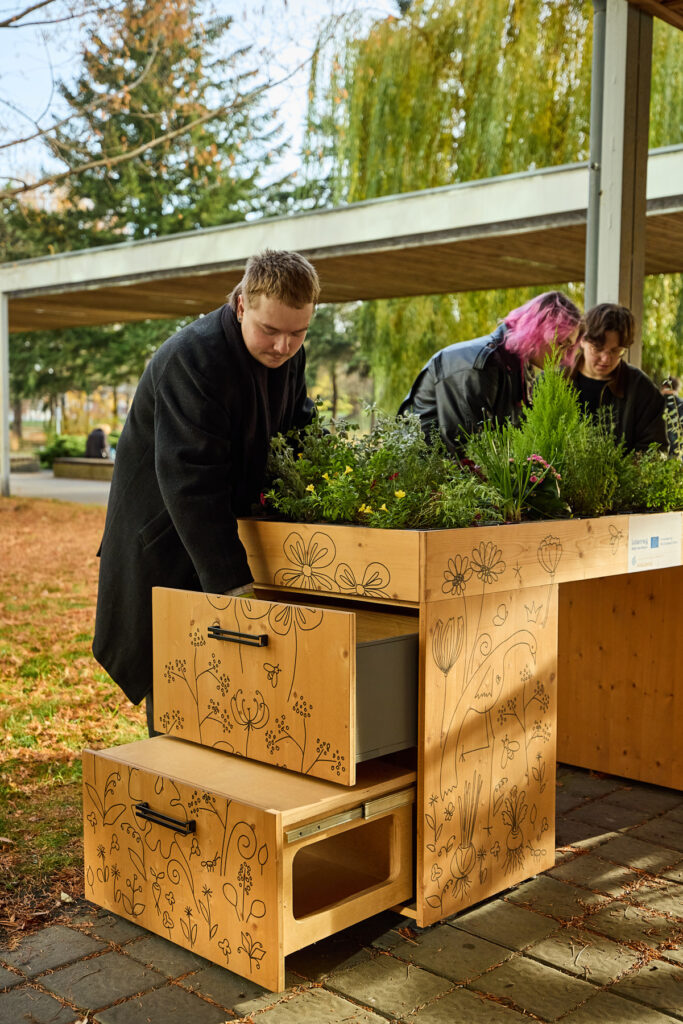
An innovative design adapted from the BaltSe@nio 2.0 project is the upgraded chest for growing plants. This is a functional piece of furniture that bridges accessibility and social gardening. The design raises garden beds to an ergonomic height that lets adults take care of the plants without bending, and the special platform hidden in the drawers allows children to reach the plants effortlessly and thereby enabling joint gardening activities across age groups. By lowering physical barriers to participation, the chest encourages intergenerational gardening, shared responsibility and tactile engagement with nature.
Digital and Physical Prototypes presented by Anja Poberznik (Satakunta University of Applied Sciences, Finland)
Anja Poberznik showcased an advanced set of developed prototypes that demonstrate how digital and physical technologies can support emotional literacy and sensory regulation. The set balances playful interaction and therapeutic intention, enabling both one-on-one and group work in schools and community settings.
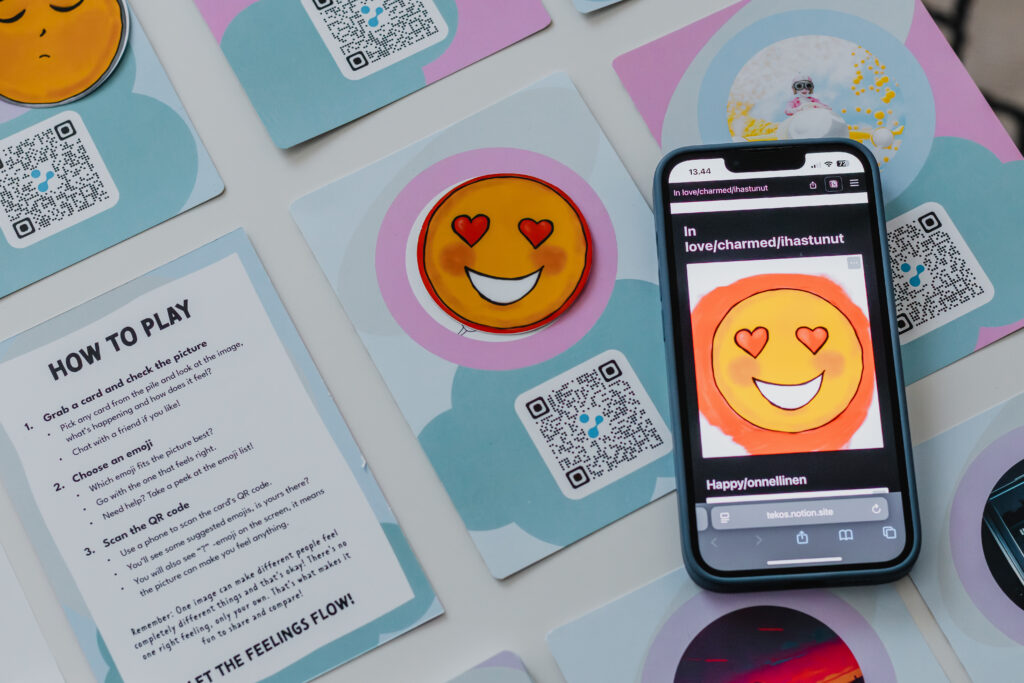
The Emoji Digital Game is a browser-based app with two core modes: an Emoji Game that asks children to mimic facial expressions shown on screen, and a Human Facial Expressions game that tests recognition through immediate feedback. By gamifying emotional matching (e.g. happy, sad, angry, surprised, scared) the tool encourages practice, reflection and playful learning, offering an engaging way to discuss and analyze emotions with children. Complementing the digital version, the Emoji Flashcards Game uses paper flashcards and emoji cutouts combined with QR codes. Children match scenarios to emojis, then scan codes to validate their choices. This analogue-digital hybrid serves as a low-tech entry point for conversations about feelings in classrooms or small groups.
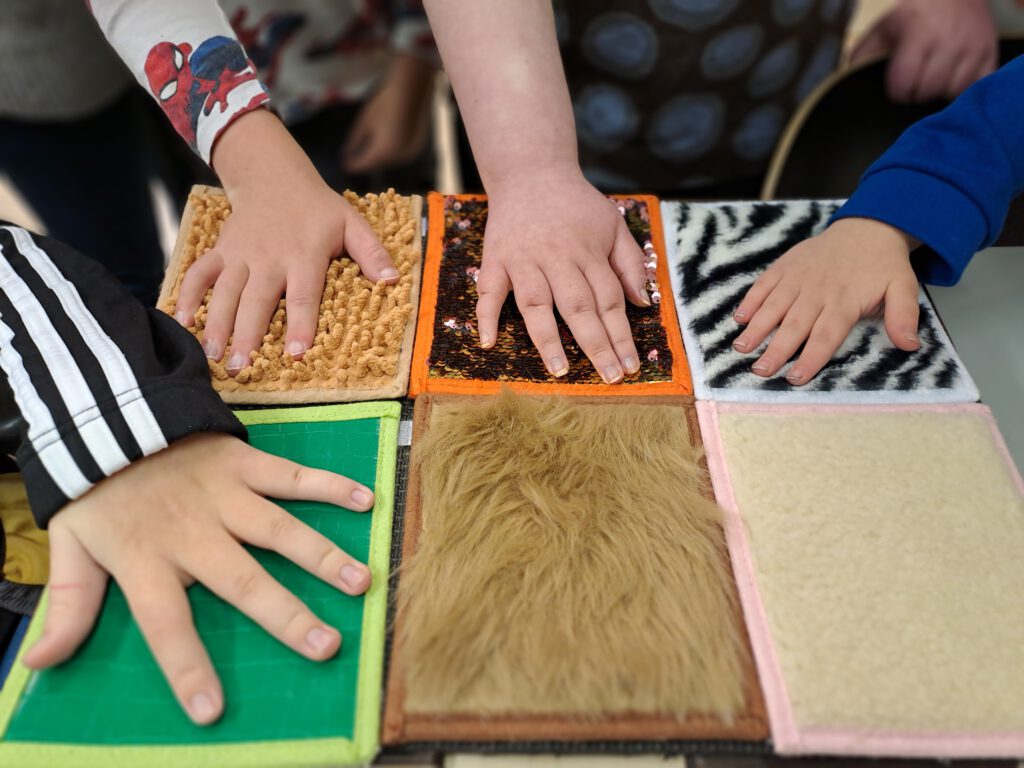
The Sensory Board translates tactile input into auditory feedback. Six textile tiles, each fitted with a pressure sensor and connected to a board computer and speaker, play animal sounds when pressed. Teachers can weave the board into storytelling: children press the tile when a character appears, adding multisensory cues that calm, engage and reinforce cooperative play.
The Music Cushion, a cat-shaped cushion with an embedded pressure sensor, plays soothing meditations and positive affirmations only while pressure is maintained. This design gives children a sense of agency: by remaining still or choosing to sit, they activate calming audio that supports relaxation, nap time or brief self-regulation moments.
For portable and immersive calm spaces, the Magic Tent uses a compact projector inside a sensory-friendly play tent to deliver calming nature animations and sounds. Furnished with pillows and blankets, the tent functions as a cozy retreat that supports both quiet regulation and playful exploration, particularly for younger children.
Finally, the Virtual Relaxation VR activity offers full-immersion relaxation exercises in two environments: a night forest and a sunny lake. Friendly animals and glowing cues guide simple breathing practices, and the experience is also available as a video version for group settings or when VR use is not available.
Building on earlier work, the Sensory Accessibility app has been further developed and adapted specifically for children. The tool evaluates how pleasant and functional an environment is from a sensory perspective and highlights spaces that might be stressful or restorative. Available in English, Finnish and Ukrainian, it requires no download, making it immediately accessible to educators and municipal planners assessing indoor and outdoor spaces.
Accompanying the prototypes are activity guides created to help teachers and volunteers integrate these tools into daily practice.
Innovative Decorative Elements by Jörgen Dobris (TSENTER, Estonia)
Jörgen Dobris from TSENTER in Estonia demonstrated a meditation tool and a breathing light that visually cues the pace of inhalation and exhalation through color and speed programs. The meditation panel includes a stability sensor that detects the user’s steadiness as a proxy for calm, while the breathing light supports rhythmic regulation through visual pacing. TSENTER also showcased furniture and wooden elements developed in cooperation with the project partners, e.g. bench dedicated to the sensory garden in the Nissi School, the chest for growing the plants, the sensory board.
VR Fairy-tale by Vesta Juocevičiūtė (Lithuania)
Smarter Step’s VR fairy-tale highlights how narrative and game mechanics can support stress management. The VR fairy-tale uses an Art Nouveau visual language, a seasonal nature motif and an animal companion (the she-wolf) to guide children through tasks that relate to the elements: water, air, fire and earth. Breathwork, simple tasks such as lighting torches and symbolic rewards (a magical key) are embedded to create a sense of mastery and perceived control, important mechanisms in stress recovery. Presenter addressed the particular challenge of keeping players focused in rich virtual spaces by layering recorded instructions, companion guidance and clear milestone checkpoints.
All the presented ideas have been gathered in one place and made public, both on the project web-page and in the eBook. The KidsLikeUs eBook was designed as a “recipe book” of well-being activities that educators and volunteers can adapt to time, audience and goals. Each activity entry provides photographs, approximate durations, intended outcomes, material lists and searchable keywords to streamline selection. Activities are gathered across three levels (basic, medium and advanced) enabling practitioners to scale interventions from a five-minute calming exercise of low-cost to a garden-building project and incorporation of digital solutions.
The materials prepared constitute downloadable presentations and short videos to reduce preparation time for facilitators. By providing modular, flexible resources, the final solution aims to democratize implementation so that low-resource settings can access the same ideas as better-equipped schools.
Reflections and strategic outlook by Wiebke Marcus (the Northern Dimension Partnership in Public Health and Social Well-Being, Sweden)
The conference closed with reflections that underscored the project’s strategic value for regional public health. Wiebke Marcus reprsenting EUSBSR Policy Area Health and the BSR Mental Health Platform framed KidsLikeUs as a model for how mental wellbeing can be promoted across sectors, not solely within clinical health services. The project’s placement within a policy platform aims to close gaps between community-based innovations and broader public health frameworks, facilitating scaling and sustained uptake. Participants were encouraged by Wiebke Marcus to view the project’s end as a launch point for integration into policy, educational practice and municipal planning, extending impact beyond the project’s funded timeline.
The conference also ended on a human note: a short video of children sharing uplifting messages in multiple languages reinforced that empathy and encouragement are universal. The video was prepared by the project team from the Satakunta University of Applied Sciences with the support of the project partners. The children voices illustrated the powerful truth that creativity, compassion and shared design can transform spaces and relationships for children in every community. It reminded participants that projects like KidsLikeUs do more than provide tools and tangible solutions – they strengthen shared human values and create channels through which those values can travel between places and generations.
Participants were encouraged to treat the tools, prototypes and stories presented as living resources that can be adapted, scaled and passed on. The true measure of success, speakers suggested, will be how these ideas take root in everyday life: a teacher who uses a breathing exercises during a stressful day, a volunteer who runs a 3D printing workshop to restore focus, a municipality that creates a sensory garden. Above all, the conference left a human lesson at its center: when children are invited to shape their environments and to speak their truths, they not only heal themselves but also model for adults a straightforward form of empathy. That resonated strongly with the inspiring message of prof. Rama Gheerawo that kindness, presence, love and commitment transform design into a powerful force for social and planetary wellbeing.
In that spirit, the closing statements from children offering hope in many languages felt less like an ending and more like an open door: an invitation to carry encouragement, creativity and shared responsibility into the coming months and years, wherever work for children’s emotional wellbeing continues.

Additional links
details
-
Homepage
-
Project typeCore Project

-
ImplementationJanuary 2023 - December 2025
-
StatusCompleted
-
Contribution to EUSBSRPolicy Area Health

-
Target groups
- Education/training centre and school
- Interest group
- Local public authority
- NGO
-
Social media
-
Additional links
-
Tags