




REAVES in Spring - Disseminating and Pollinating like Bees in a Flowering Meadow
30 April 2026
Platform projects are designed for pushing dissemination of results and solutions after a project ends. Our project partners have been busy as bees in springtime over the past months spreading the word about the REAVES platform, their solutions, tools and and looking into opportunities for strengthening the ecosystems of their creative economies.
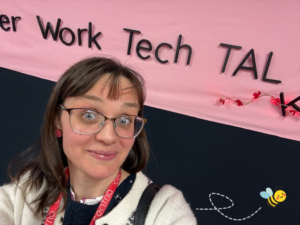 Laura and Taina from Centria University, Finland, participated in the Women AfterWork Tech Talk. During the evening, they heard stories about women in male dominated branches. With their project X Border Support 4 Games, they held a networking session on “Is gender equality a reality in the gaming industry and cybersecurity?”. Laura also wrote a paper on women in cybersecurity that is due to be published in May. Meanwhile, her colleague Subashri has published an article on the social impact of cultural projects in the Ostrobothnia region with a particular focus on its role as a driver for social inclusion and sustainable development.
Fabian from Hamburg Music Business, Germany, has met with members from the SONIC project which tackles the lack of policy support for SMEs in the music industry. During this meeting, he presented the REAVES project and discussed potential synergies between the two projects.
Christine from BGZ, Germany, organised an investor round table bringing film and games investors together. In the spirit of the 76th Berlin International Film Festival, they discussed different investment strategies and concept in the two sectors. Developed and piloted during the BSG Go! project, this peer2peer format has proven to be a suitable approach of facilitating exchange between industry experts, also across sectors. Furthermore, she pitched the REAVES project at the online meeting “Interreg im Dialog” with German Interreg officials and partners as well as at the Steering Committee Meeting of the Policy Area Culture.
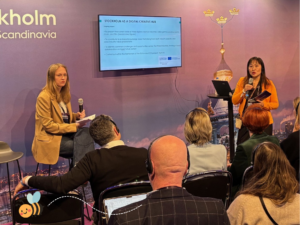
Jenny from Stockholm Business Region, Sweden, has published a report on Stockholm as a digital creative hub with compelling insights on the games, music, and film sector in and around Stockholm. The report mirrors the ambition of REAVES as platform project, stimulating cross-sectoral understanding as a way to consolidate valuable solutions and encourage increased impact for the project results. It was presented during the Google Breakfast Meeting and in a lunch workshop at the Stockholm Tech Arena in February 2026. At the Stockholm TechArena, Jenny presented these findings to members of all three sectors interested in the Swedish Creative Economies.
Ieva from the Lithuanian Innovation Centre held a roundtable with national stakeholders from the Creative and Cultural Industries on the 19th March. Participants ranged from the Ministry of Culture of the Republic of Lithuania to the Vilnius Gediminas Technical University, Lithuanian Game Developers Association, Vilnius District Municipality, Baltic Film & Creative Tech Cluster, and Lithuanian Creative Industries Association, among others. The roundtables are one activity which is at the very heart of REAVES to strengthen ties between the various stakeholders and influence public authorities to foster a better environment for building a strong ecosystem and promoting economic opportunities. The Lithuanian approach assessed the current state and development potential of the Art-Tech ecosystem with particular attention to cross-sector collaboration between creative industries and advanced technologies (e.g., AI, XR, immersive media). Participants acknowledged the growing maturity of the ecosystem, while also identifying key bottlenecks such as fragmented support structures, limited access to tailored financing instruments, and the need for stronger international positioning. Participants explored specifically how
Two other busy bees in our project are Mikkel and Allan from Games Hub Denmark. They have carried out a thorough ecosystem mapping identifying representatives from higher education, business support, public authorities, industry associations, established companies, public funding schemes. This analysis and a set of proposal to establish a shared regional hub with strengthened cross-institutional educational programmes, a coordinated incubation initiative, and recurring industry events, will be at the heart of their round table discussion in autumn this year. These initiatives directly address the need for a more cohesive value chain, enabling talent to be developed, retained, and transformed into sustainable businesses in Business Region Aarhus – a regional collaboration between municipalities in East Jutland, Denmark, working together to promote economic growth, business development, and international competitiveness – but have also incorporating relevant stakeholders that work on a national level.
In May, REAVES will be present at the BSSSC Day of Cities and Regions at the Networking Village and also organise a breakout session at the EUSBSR Annual Forum in Tallinn. In the workshop, we will address the question of how to best engage with regional authorities and facilitate discussions on a political level about the role CCIs, and in particular creative economies can play to strengthen the regional economy, labour market and counteract demographic deficiencies.
As you can see, busy as bees all around the Baltic Sea Region!

Additional links
details
-
Homepage
-
Project typeProject Platform

-
ImplementationJuly 2025 - December 2027
-
StatusOngoing
-
Contribution to EUSBSRPolicy Area Culture

-
Target groups
- Business support organisation
- Higher education and research institution
- International governmental organisation
- Regional public authority
- Small and medium enterprise
-
Social media
-
Additional links
-
Tags