




New report maps circular economy opportunities at Port of Norrköping
13 April 2026
The preparatory study, conducted by researchers from RISE Research Institutes of Sweden and VTI Swedish National Road and Transport Research Institute, specifically aims to:
- Describe the pilot objectives and scope
- Map selected waste and material streams generated from port operations, visiting ships, and port construction activities
- Identify existing and potential circular solutions and relevant stakeholders
- Assess how waste streams can be shifted towards higher-value circular economy strategies
Six priority waste streams were identified, including wood waste, complex materials such as mooring lines, combustible waste, and landfill materials — most of which are currently incinerated for energy recovery, the lowest level of circularity. The report explores how each of these could be elevated up the circularity ladder.
But the report’s most compelling finding goes beyond everyday waste streams. The port’s planned quay expansion presents a remarkable circular opportunity: excavated rock and soil generated by the nearby East Link high-speed railway construction could potentially substitute virgin fill material, cutting emissions, reducing transport costs, and avoiding unnecessary resource extraction. It’s a real-world example of industrial symbiosis in action.
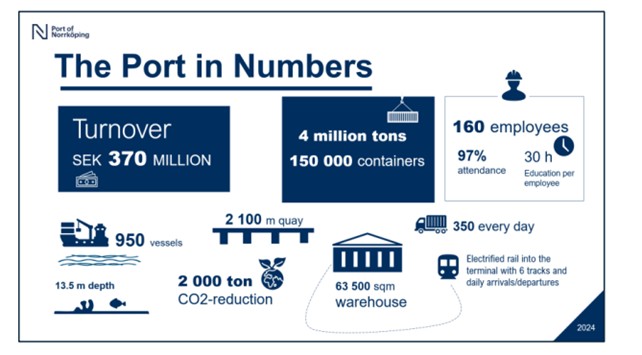
The port — which handles 4 million tonnes of cargo annually and was awarded Environmental Port of the Year 2025 — is already embedded within the Händelö Eco-Industrial Park, giving it a strong foundation for building new circular value chains.
Next steps include stakeholder dialogues with regulatory authorities, environmental assessments, and deeper feasibility analysis. Watch this space.
Read the Report
The full pilot status report is available for download here: Pilot report: Opportunities For Circular Economy – Port of Norrköping

Additional links
details
-
Homepage
-
Project typeCore Project

-
ImplementationMarch 2025 - February 2028
-
StatusOngoing
-
Contribution to EUSBSRPolicy Area Transport, Policy Area Ship

-
Target groups
- Infrastructure and public service provider
- Local public authority
- Small and medium enterprise
-
Social media
-
Additional links
-
Tags