




Baltic Sea Region Advances Toward S-100 Digital Navigation
19 December 2025
The maritime world is entering a new digital era. After decades of relying on paper charts and later S-57 electronic navigation, the sector is now accelerating toward S-100 framework, a new way for sharing and integrating navigational information. That momentum was on full display in Copenhagen the 3rd of December 2025, where experts from across the Baltic Sea region gathered to push the transition forward.
The Baltic Sea Region funded projects MaDaMe, ORMOBASS and Baltic Sea e-Nav presented results, shared pilot experiences and outlined next steps for safer and more efficient navigation. The hybrid seminar brought together nearly 150 participants from more than 20 countries, including representatives of maritime authorities, shipping and technology companies, as well as research and higher education institutions.
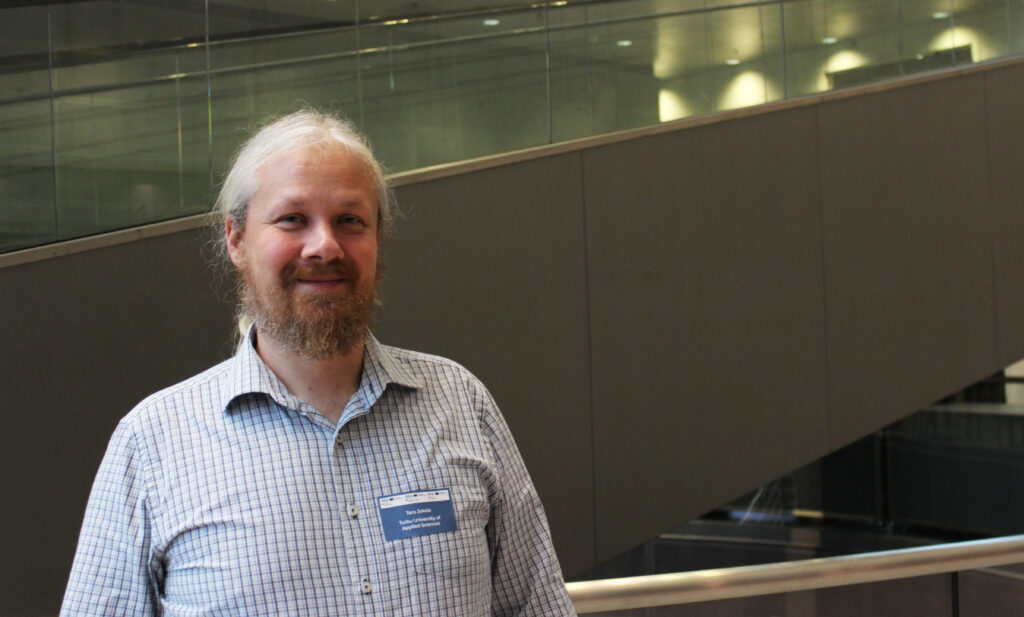
Tero Jokela, Project Manager at Turku University of Applied Sciences, provided an update on the MaDaMe project.
“We are about two-thirds through the project, with pilots still underway and the next phase focusing on sharing results. The three projects stay in close collaboration because we work in similar service areas and want to understand where each project is heading. Seminars like this help us exchange information and keep everyone moving in the right direction,” Jokela said.
Digital VTS Pilots in Finland
Project Manager Sirpa Kannos from Fintraffic VTS presented the results of Finland’s S-212 VTS Traffic Clearance Service (TCS) pilots conducted within the MaDaMe project. She explained that TCS differs from most of the other S-100 services, where information is sent from shore to ships, because VTS operations require bidirectional communication between vessel and VTS centre.
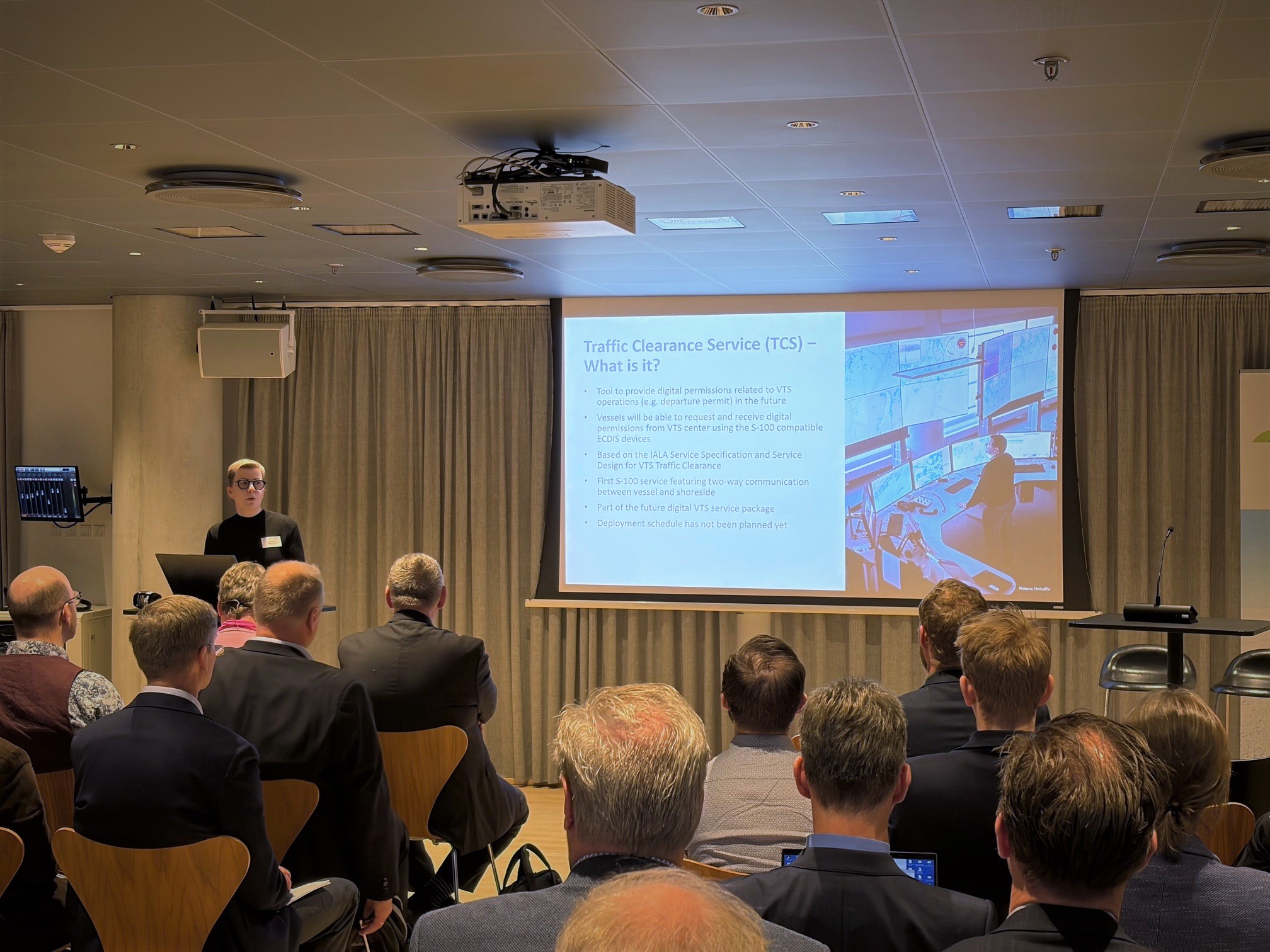
The path to TCS has not been straightforward.
“The service forms only one component of a much larger future suite of digital VTS functions. The development process is challenging because many of the services surrounding TCS are not defined yet, but we still need to start somewhere,” Kannos stated.
She explained that the pilots were carried out in two phases: a three-day simulator testing followed by two-week onboard testing on Finnlines vessel. The technical performance met expectations.
“TCS worked well, and the communication via IP connectivity using SECOM performed successfully for secure bidirectional information exchange. User feedback highlighted improved clarity, reduced misunderstandings, and the benefit of receiving written information. For example, receiving coordinates digitally instead of having to write them down from a VHF conversation offers a significant improvement,” Kannos said.
She also emphasized that mariners expect clear added value from new digital services.
“They want to have new and better services instead of the old services in a new package”, Kannos said.
Some concerns were also raised in the user feedback.
“Concerns raised by users included the digital message acknowledgement practises, impact of digital interaction on shared situational picture between vessels as well as on bridge work processes. Vessels without digital capabilities must also remain informed. The long transition period during which voice and digital communication will run in parallel was also recognized as a potential safety concern. This is a question that requires careful planning and early attention.” she said.
Modernizing Maritime Safety Information
Chief adviser, E-navigation Christopher Saarnak from the Danish Emergency Management Agency (DEMA) presented Denmark’s contribution to the S-124 Maritime Safety Information pilots.
“DEMA will deliver the S-124 service for navigational warnings in 2026. We will follow the recommendation and timeline for S-201 and S-125 as given by IHO and IALA, and make sure that the services are tested well before implementation” Saarnak said.
For the MaDaMe pilots, DEMA enhanced its NIORD system to generate S-124 data packages and connected the setup with the Maritime Identity Registry and Maritime Service Registry, ensuring compatibility with the developing Maritime Connectivity Platform (MCP) infrastructure.
The Role of the Maritime Connectivity Platform
CEO of Digital Maritime Consultancy Thomas Christensen started off by describing the starting point for the development of the Maritime Connectivity Platform (MCP).
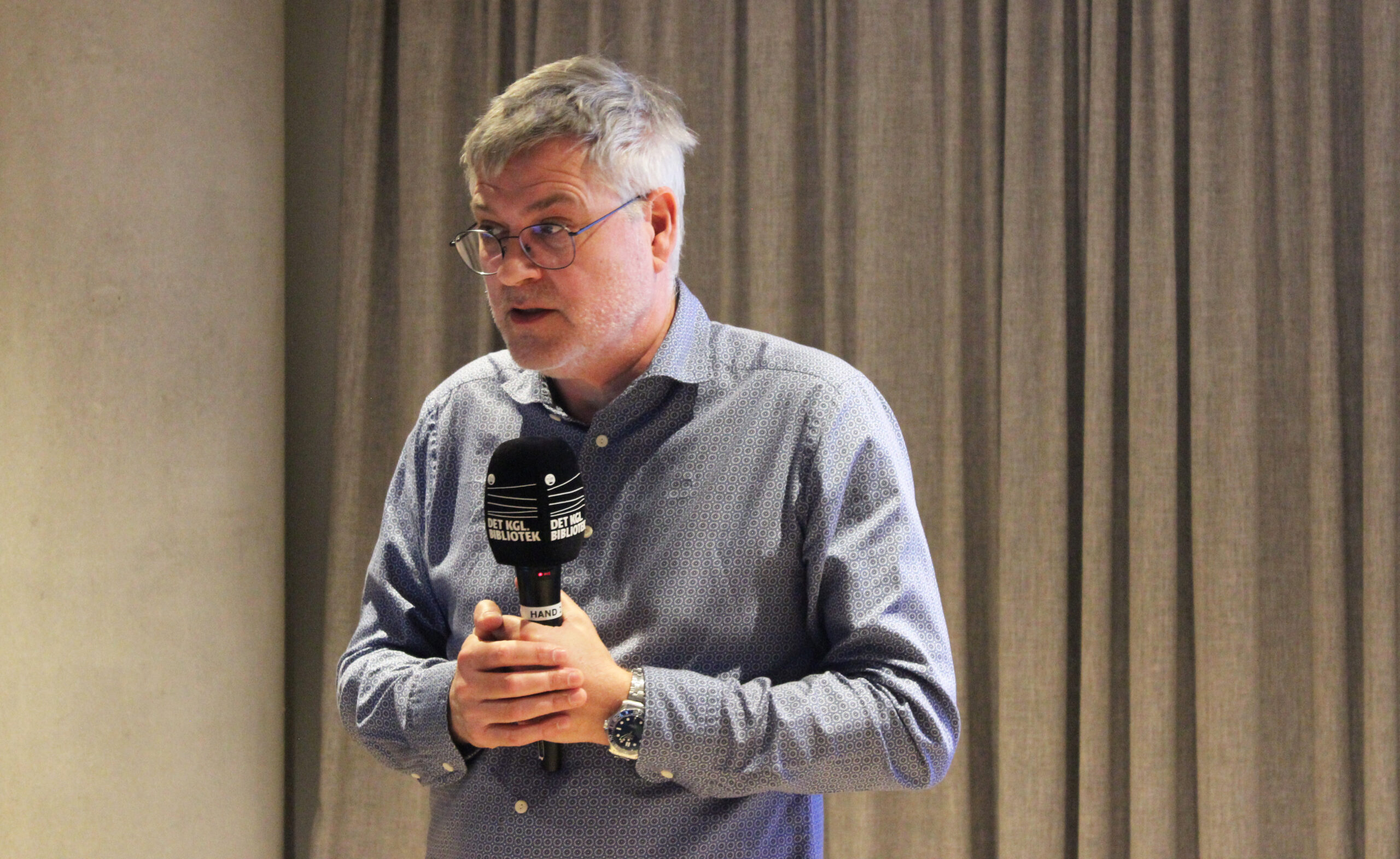
“We realized we needed more than raw communication channels. We needed a platform,” he said.
MCP is constructed from three components: the Maritime Identity Registry (MIR), the Maritime Service Registry (MSR) and the Maritime Messaging Service (MMS).
In his presentation Christensen provided the audience with basic information, development and standardization status of the MCP.
“The fact that IHO has made a decision to operate instances of both the identity registry and the service registry was a huge step forward for the adoption of the MCP”, he said.
Christensen concluded his presentation by describing the MCP-related activities in the MaDAMe project and highlighting the importance of international cooperation in MCP development.
Demonstrations to Showcase the Services in Practice
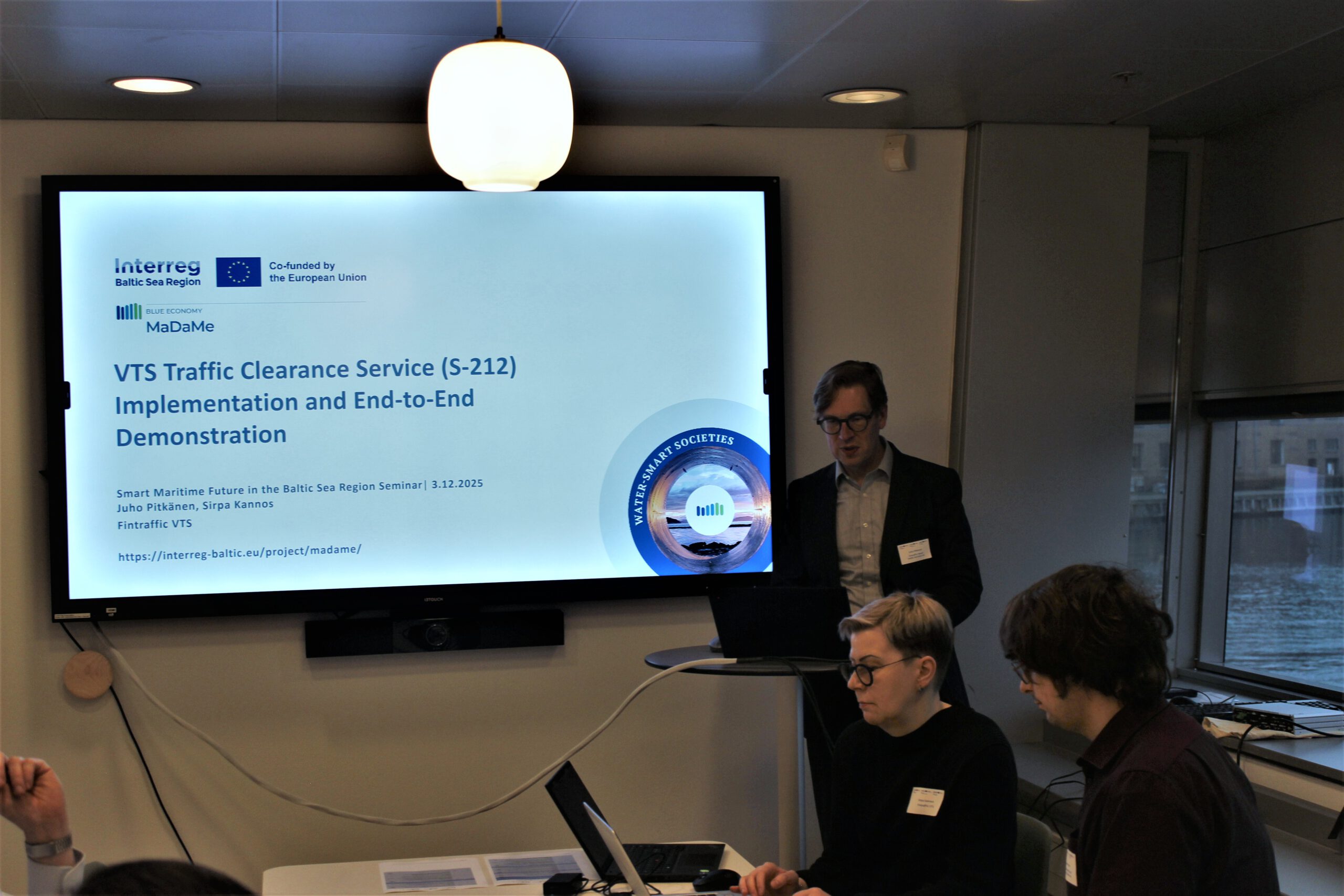
In the afternoon three technical sessions and demonstrations concerning the MaDaMe project were held. The first was the VTS Traffic Clearance Service implementation and end-to end demonstration held by Head of Digital Services Juho Pitkänen and Sirpa Kannos at Fintraffic VTS.
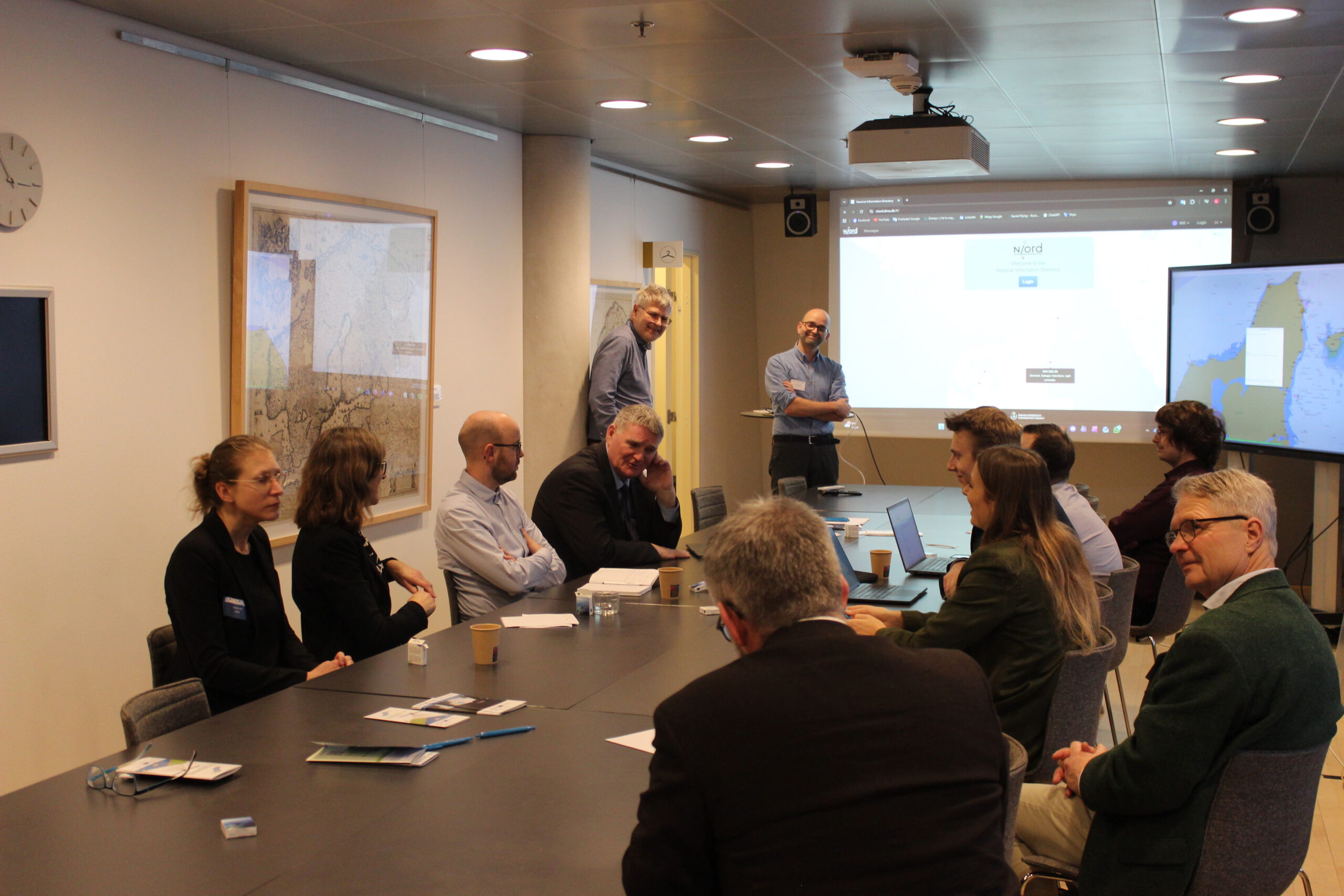
Mads Sølver Svendsen, Head of R&D and System Architect at Sternula held a live demonstration on S-124 navigational warning over VDE-TER using Niord and MCP/MMS.
The seminar ended with a demonstration of interoperability of S-124 and S-125 services held by Specialist Tuomas Martikainen from Finnish Transport Infrastructure Agency, Christopher Saarnak, Project Manager Ahmed Elhadi from Novia UAS and Project Researcher Niilo Nurminen from Novia UAS.
Strong Regional Collaboration
The event demonstrated strong regional coordination and reinforced the shared ambition of the Baltic Sea community: the transition to S-100 is progressing steadily, supported by joint testing, aligned development and consistent cross-border collaboration.
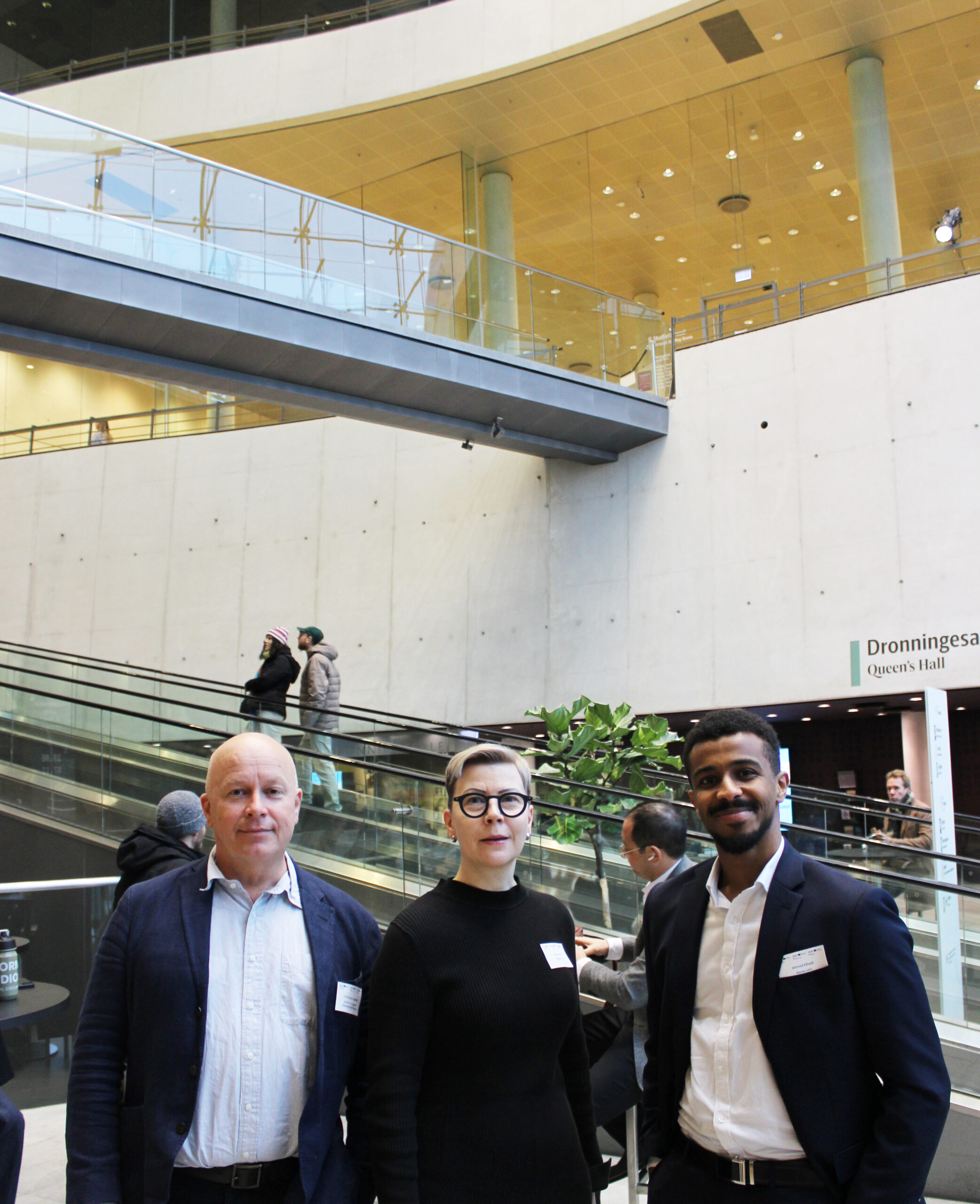
Christopher Saarnak (DEMA), Sirpa Kannos (Fintraffic) and Ahmed Elhadi (Novia UAS).
Glossary
S-100 – IHO Universal Hydrographic Data Model.
S-57 – IHO Transfer Standard for Digital Hydrographic Data for current standard for Electronic Navigational Charts (ENCs).
S-212 – IALA VTS Digital Information product specification.
SECOM – A standard for Secure Exchange and Communication of data, particularly S-100 data products.
S-201 – Aids to Navigation Information.
S-124 – IHO Navigational warnings product specification.
S-125 – IHO Marine Aids to Navigation product specification.
ATON – Aids to Navigation, such as buoys, beacons, lights or AIS ATON that support safe navigation.
TCS (Traffic Clearance Service) – Tool to provide digital permissions related to VTS operations (e.g. departure permits) in the future.
VTS (Vessel Traffic Service) – A service designed to supervise and manage vessel traffic.
MCP (Maritime Connectivity Platform) – A digital framework that provides secure identity management, service discovery and messaging for maritime systems.
Niord system – Denmark’s platform for creating and distributing Maritime Safety Information, recently upgraded to generate S-124-compatible data.
Text: This news is modified from the original version at News – Baltic Sea Region Advances Toward S-100 Digital Navigation » novia.fi.
Photo credit: Nadine Karell, Novia University of Applied Sciences & Mona Elo, Satakunta University of Applied Sciences

Additional links
details
-
Homepage
-
Project typeCore Project

-
ImplementationNovember 2023 - October 2026
-
StatusOngoing
-
Contribution to EUSBSRPolicy Area Safe, Policy Area Ship

-
Target groups
- International governmental organisation
- Large enterprise
- National public authority
- Small and medium enterprise
-
Social media
-
Additional links
-
Tags