




Pilot Action in Latvia
12 December 2025
The Latvian pilot of the BSI_4Women programme, implemented by Ventspils High Technology Park, combined early outreach activities, structured recruitment, and an intensive incubation process tailored to the needs of refugee and migrant women living in Ventspils and the Kurzeme region. The promotional campaign began on 10 September 2024 and continued until 7 October, using a wide range of communication channels to ensure visibility and direct contact with the target group. Press releases were published on ventspils.lv, ventspilsnovads.lv and vatp.lv, the announcement was added to the Ventspils city calendar, visual invitations appeared on more than ten digital advertising screens across the city, and messages were disseminated through the Facebook pages of VHTP and RADE. Direct communication with the Ukrainian community through a dedicated WhatsApp group proved particularly effective, as it enabled personal dialogue and instant reach. A project light box with information about the initiative was also placed in VHTP premises to attract visitors’ attention.
Before recruitment officially started, a face-to-face business idea generation event was held on 18 September 2024 in the VHTP premises, attended by six Ukrainian women. Participants worked with the Business Model Canvas, learned about the upcoming incubation programme, and were able to explore their early-stage ideas with the support of the project team. This event played a key role in establishing trust and motivation; four of the women who later applied had either participated in this meeting or had intended to do so but were unable to attend.
The recruitment period ran from 8 to 31 October 2024 via the BSI_4Women digital platform. A dedicated landing page in Latvian, Ukrainian and English explained the programme, benefits and selection criteria, directing potential applicants to the application form on startuphive.eu. In total, eight Ukrainian women registered on the platform, and six of them submitted full applications. The assessment took place between 1 and 22 November. All six submissions passed the formal assessment, and four women were approved and signed participation agreements. All four selected participants were Ukrainian; one had prior business experience and all had clearly defined early-stage ideas with realistic potential for further development, though mostly with limited innovative components.
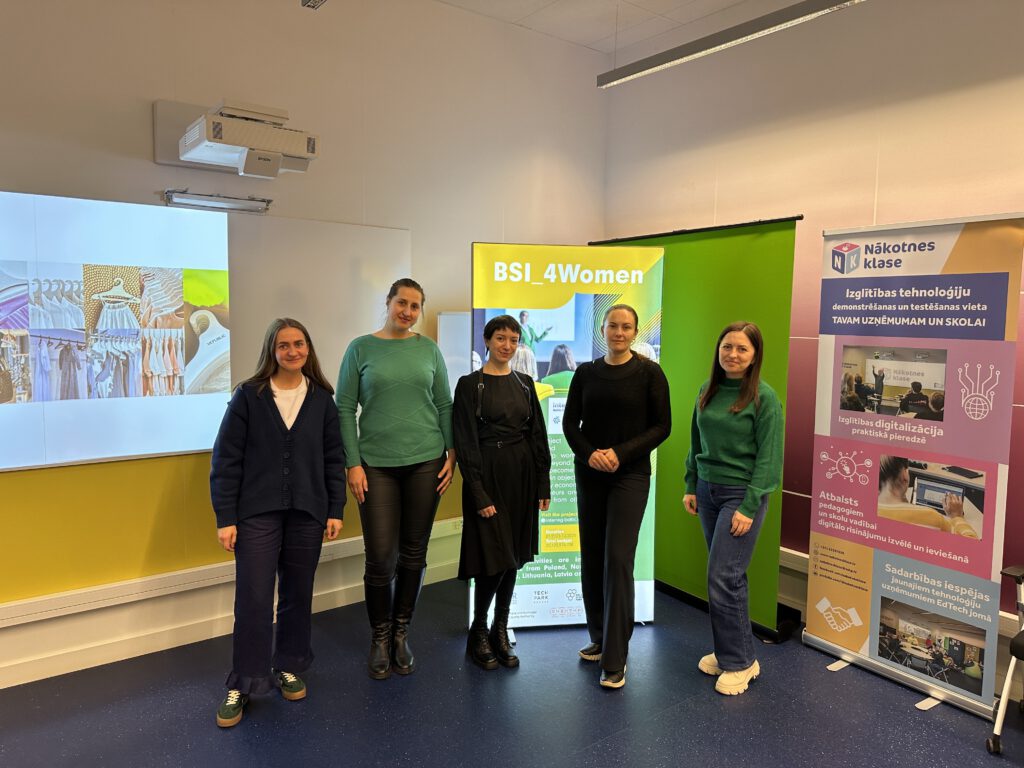
Incubation program Kickoff event on 11.12.2024, © Foundation „Ventspils High Technology Park”, 2024.
The incubation process was structured around personalised support plans and regular contact with mentors. Each participant received an individual incubation plan, followed by individual consultations on legal matters (for all four women), financial aspects (for two women), marketing strategy, and—when relevant—additional guidance on EU funding opportunities and coaching. This direct, one-on-one format helped the participants navigate the complexities of the Latvian business environment and address both practical and emotional barriers to entrepreneurship.
Alongside mentoring, VHTP organised six regional workshops in which all four participants took part. The first event, “Success stories in other countries”, took place on 11 December 2024 and featured three business owners, including a Ukrainian entrepreneur, who shared their experience of starting a business in Latvia. Subsequent workshops covered cultural differences and business culture on 15 January 2025, legal aspects of starting and running a business on 29 January, financial issues on 20 February, EU funding applications on 13 March, and pitch deck preparation on 13 May 2025.
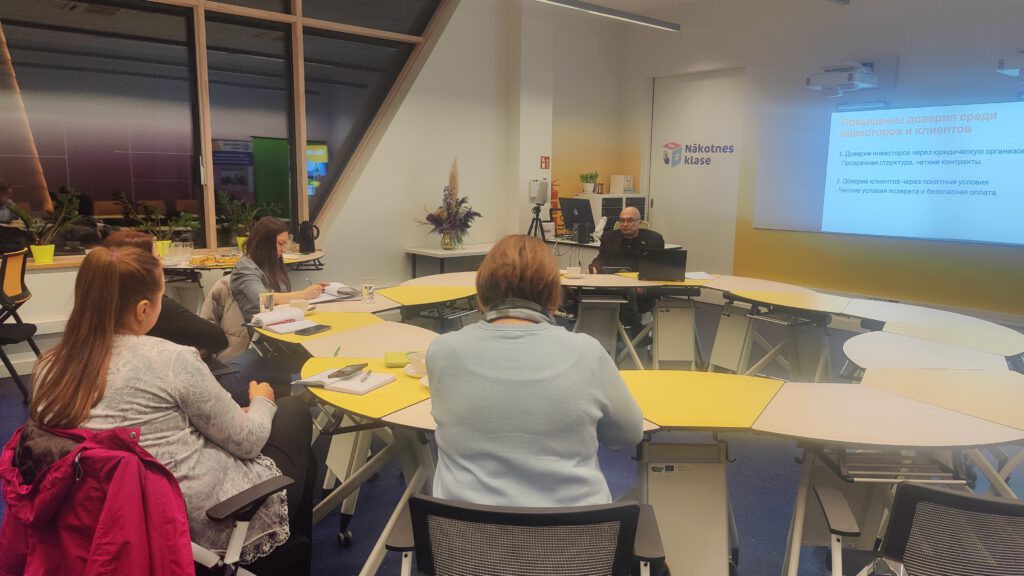
Workshop on Legal issues on 29.01.2025, © Foundation „Ventspils High Technology Park”, 2025.
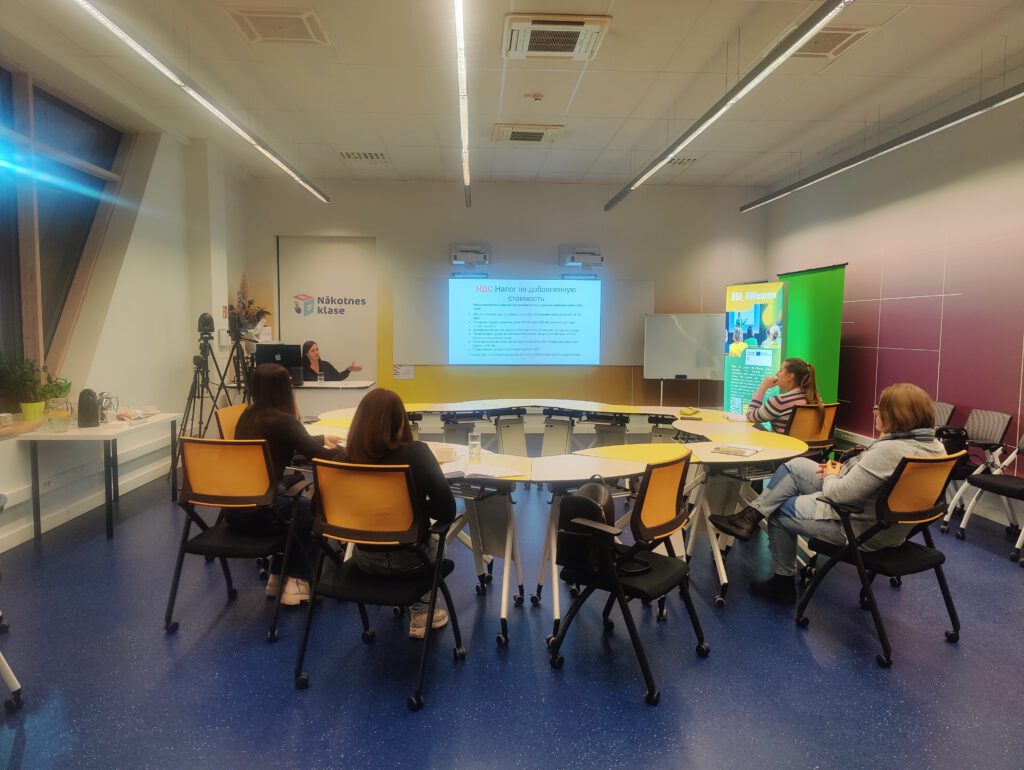
Workshop on Financial issues on 20.02.2025, © Foundation „Ventspils High Technology Park”, 2025.
The four business ideas developed through the programme reflected a diverse range of services shaped by the women’s personal expertise and the needs of local and international audiences. “Truck Dreams” specialised in producing tailored bedding designed specifically for truck cabins, improving comfort, hygiene and ease of use for long-distance drivers. “Eshyoga” offered tantra and yoga classes focused on harmonising the body, mind and inner balance. “Space English Era” developed an English-language learning platform for specialised fields such as medicine and law. “The Heartalk” provided psychological support, particularly for people traumatised by the ongoing war in Ukraine. Together, the ideas demonstrated a mix of practical, human-centred solutions with the capacity to grow in both local and cross-border markets.
The Regional Demo Day on 13 May 2025 in Ventspils marked a significant milestone for all four participants. They presented their business ideas: a tailored bedding concept for truck drivers; a holistic yoga and tantra platform; a psychological support service for people affected by the war in Ukraine; and a specialised English-learning platform for professional fields. The evaluation panel consisted of five experts representing the municipality, the regional authority, the university, a Ukrainian-founded digital enterprise and a private-sector company. The event, attended by 11 participants including VHTP staff, was held in a closed format and enabled a professional yet supportive environment for pitching.
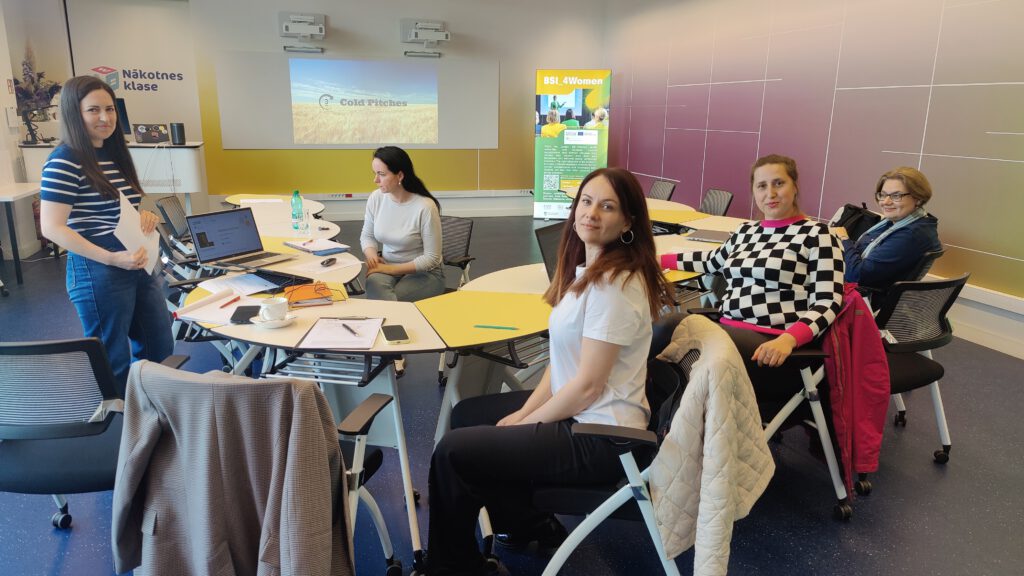
Pitch training on 13.05.2025, © Foundation „Ventspils High Technology Park”, 2025.
Two of the four participants were nominated to take part in the Transnational Demo Day on 21 May 2025 in Jasionka, Poland, where they had the opportunity to present their ideas ,“Truck Dreams” and “Eshyoga”, on an international stage.
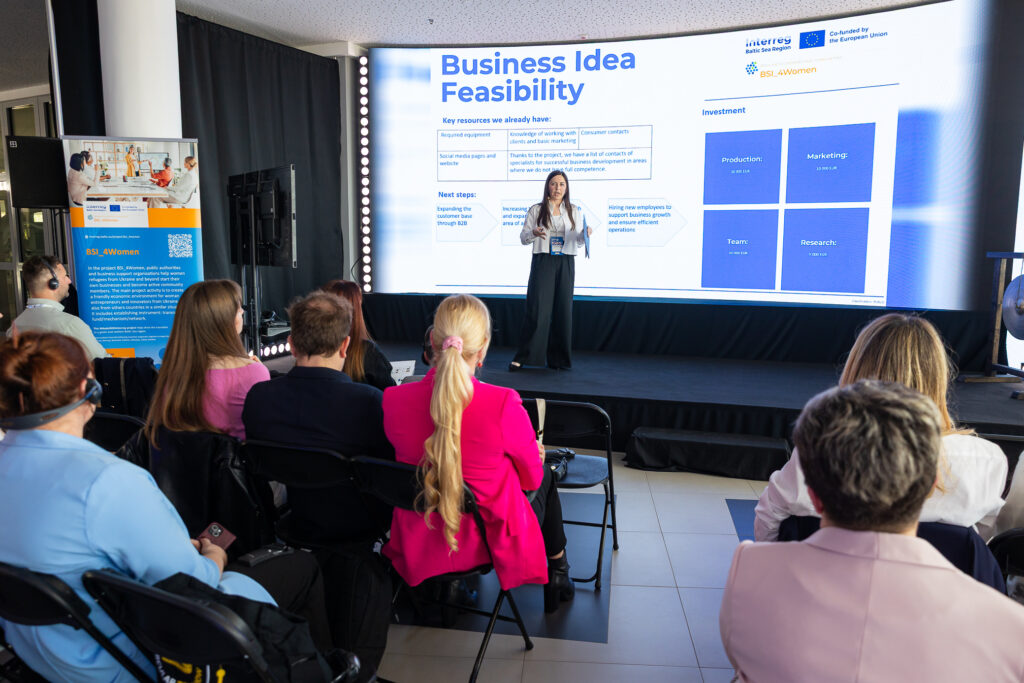
Transnational Demo Day in Poland on 21.05.2025, © Rzeszow Regional Development Agency, 2025.
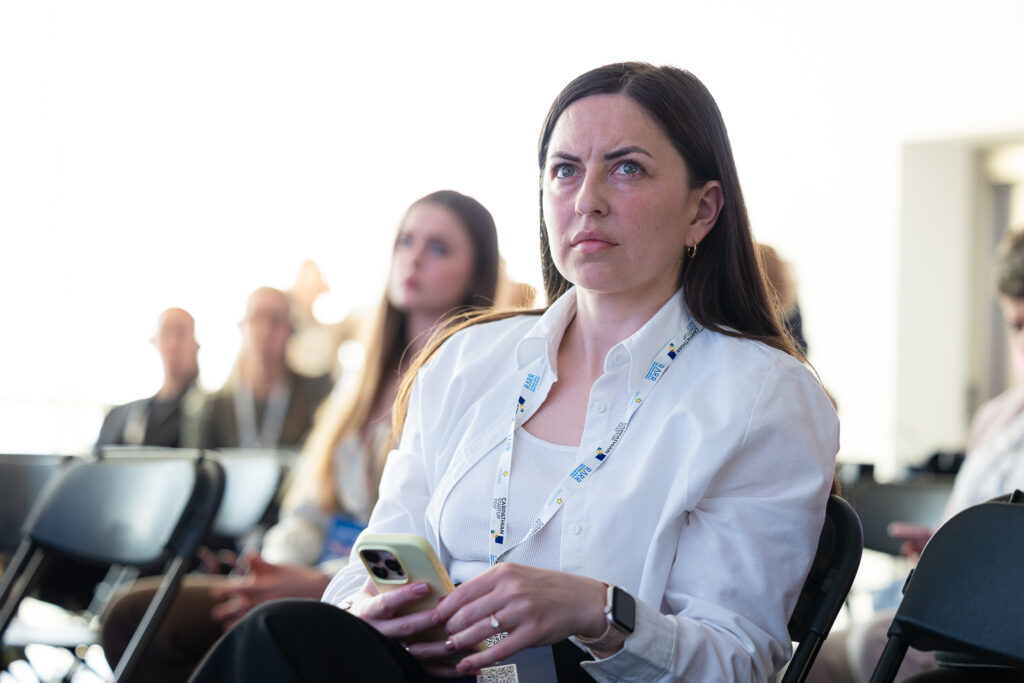
Transnational Demo Day in Poland on 21.05.2025, © Rzeszow Regional Development Agency, 2025.
After the completion of the main incubation phase, VHTP continued to support the participants by offering access to consultations, business contacts, premises and equipment. Three out of the four women actively used the post-incubation support, working with the Head of the VHTP Business Support Centre to refine their business plans, explore next steps and strengthen their local networks. This follow-up stage helped maintain momentum after the Demo Day and offered practical continuity—an element repeatedly underlined by partners as a success factor.
The recruitment phase revealed several structural challenges typical for smaller regions: a limited number of potential applicants, competing life priorities such as employment and housing, and the difficulty of reaching women who had not yet stabilised their daily routines after displacement. The programme team responded through direct communication, regular meetings with the Ukrainian community and personalised encouragement. Another challenge was the need to adapt the joint recruitment toolset to fit national requirements and the regional context; this required internal coordination but was successfully resolved.
Participants’ evaluations highlighted the usefulness of mentoring, the relevance of practical workshops, and the value of personalised guidance. They noted strong satisfaction with the programme and expressed appreciation for its supportive environment. Suggestions included the addition of more practical peer-learning formats and interactive sessions. Stakeholders—two of whom completed the evaluation survey—confirmed high satisfaction with the programme’s relevance and structure, emphasising successful cooperation between regional authorities, NGOs and VHTP. They also recommended sharing success stories in local media to further raise awareness and inspire other refugee women.
The internal evaluation confirmed the programme’s usefulness, emphasising the importance of flexible scheduling, individualised support and materials available in participants’ languages. The main challenges included communication barriers, occasional mismatches between the jointly developed tools and the regional context, and topics such as venture capital or Lean Startup that were less relevant for micro-business-focused participants. Nonetheless, the team highlighted several successes: full completion of the programme by all four participants, effective expert support and the selection of two women for the Transnational Demo Day.
Taken as a whole, the Latvian pilot demonstrated that refugee and migrant women benefit most when incubation programmes combine personalised guidance, flexible structure, practical skills training and continuous follow-up support. The integration of local authorities, NGOs and community networks amplified the programme’s reach, while the hands-on workshops made early business steps achievable. The experience also showed that allowing regional adaptations within a joint framework is essential for aligning the programme with local realities and ensuring meaningful outcomes for participants.
Photo in the header: BSI_4Women Incubation Program Latvia – Workshop on Cultural differences on 15.12.2025, © Foundation „Ventspils
High Technology Park”, 2025.

Interactive map showing pilot locations. Use the arrow keys to move the map view and the zoom controls to zoom in or out. Press the Tab key to navigate between markers. Press Enter or click a marker to view pilot project details.
Additional links
details
-
Homepage
-
Project typeCore Project

-
ImplementationJanuary 2023 - December 2025
-
StatusCompleted
-
Contribution to EUSBSRPolicy Area Innovation

-
Target groups
- Business support organisation
- Education/training centre and school
- Interest group
- Regional public authority
- Small and medium enterprise
-
Social media
-
Additional links
-
Tags